BLOG

An Industrial Strategy for now

We have long thought about “Industrial Strategy”, and whether or not it was the correct way forward in an environment where liberalisation has time and time again showed innovative and competitive advantages are normally best left to the firms pursuing them.

Arguably, however, we are at a tipping point… Philosophers and political scientists have for decades argued about the nature of change, and the consensus is that change itself has accelerated… This is why now perhaps revisiting industrial strategy may well be the smart move.

Let us start with possibly a less intuitive position: I am not particularly in favor of electric vehicles. I believe that they are a transition technology, and little more… Not noted for his economics’ or political science credentials, the comedian Rowan Atkinson, recently pointed out in a series of articles, how simply using our existing car stock for longer is almost certainly more environmentally friendly than the intensive resource depletion of rare earth metals, in the production of millions of new car batteries… And this is not to mention the rest of the materials that go into the making of a car… Not least the fact that these batteries themselves have a life expectation of 10 years, and therefore represent built-in obsolescence.

Rather, and perhaps we may expand on these in a series of articles to come, now is the time to consider consistent, rigorous and stable Government supported policies to promote incentives in capital development in areas of applied AI. At MBC I personally would argue a focus for support on the next iteration of generative AI, and its potential productivity gains across the services sector. Secondly, quantum computing, which is in its infancy and whose potential has been discussed for years – yet it remains in a form of ‘investment nursery’. The UK is a world leader in life sciences, so arguably matching quantum computing to the development of necessary and new antibiotics in humanities fight against antibiotic resistance, would be a phenomenal application of a targeted industrial strategy.

And last in this immediate tranche of sectors ripe for strategic support, the greatest of all: our climate crisis. The fracturing of European wide academic and scientific relations, post Brexit, needs to be resolved with a sense of urgency. This is quite simply a future bet we cannot get wrong, which requires international cooperation. Again the UK has a reputation for excellence in the geophysical sciences, and areas such as carbon sequestration need to be scaled up and made viable – and implementable – not least in the developing world, as it seeks to leapfrog up the value chain. Yes, renewable energy is the way forward, yet there are many countries in emerging markets still building more traditional power generation, than renewable.

As we can see at a time of monetary tightening and institutional interest rate rises, there is little spare  to fund Government largesse… But that is not what is needed – rather simple, clear, consistent and robust tax and investment incentive strategies to help enhance our already existing competitive advantage in these areas. I for one feel the productive gains that are possible from AI could represent a developmental step change… Ushering in all kinds of societal responses, including the possibility of a universal basic income for those workers displaced. In order to ride this wave, not least to possibly help direct it, we need to be sitting on its crest.

The awful reality of pragmatic politics… Re-admitting Syria into the Arab League.

The awful reality of pragmatic politics.

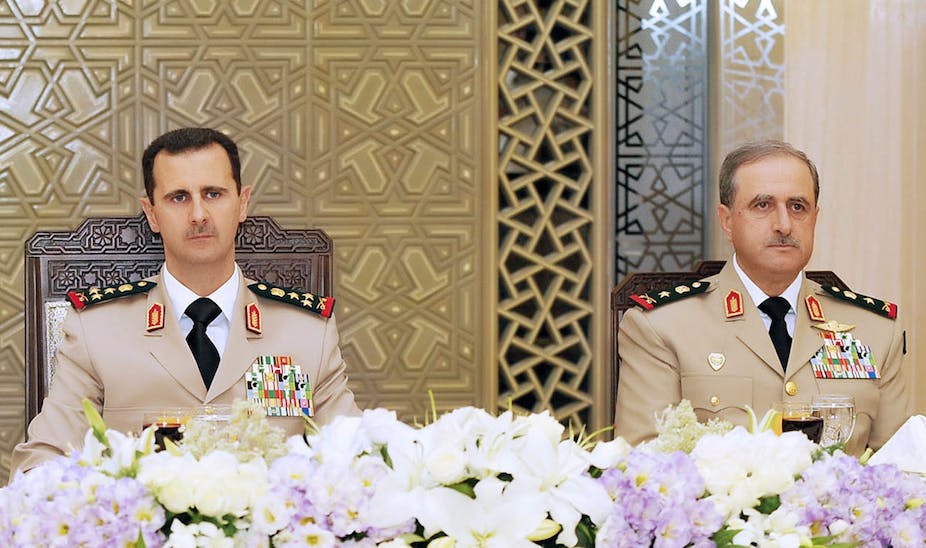
Syria is to be re-admitted into the critically important regional economic and political block that is the Arab League. The Syrian regime under Bashar al-Assad, has systematically ruined their country, killing an unknown number of his own citizens – conservatively estimated to be half a million people… 13.5 million Syrians are either internally or externally displaced, with again a conservative estimate of six and a half million of these refugees, forced to flee the country…

And yet after 12 years of brutal and brutalising war, the Arab League, under the auspices of Saudi Arabia, have decided to re admit Syria. The subtleties of geopolitics are important here: the League has reasoned under Saudi leadership, that the readmission of Syria will help to leverage it away from external influence, notably that exercised by Russia. It will also temper the regional influence of Iran and Turkey. Hopefully and more importantly from an institutional capacity building perspective, it will open the doors to regional aid and economic and humanitarian support. On top of this are the huge numbers of refugees in neighbouring countries, notably Lebanon and Jordan, adding significant domestic pressures onto these countries. Particularly in the case of Lebanon, itself a broken state, this burden has been too much to bear.

Much is it truly pains me to say, this might actually be the smart move. I also do not feel that it is untoward the Saudi administration has ignored the immediate reaction of both Britain and the US. It’s fine to moralise, from several thousand miles away, whilst making no material difference to the devastation on the ground. Obama lost the West its right to claim the high ground, when it refused to act, despite claiming the use of chemical weapons would be a “red line” the Assad regime should not cross. The regime, of course, crossed this line and the west did nothing… Occasionally in order to feed the hostages of the wolf, you have to invite the wolf out of the cave in the first place…

More maths for kids? Great!

On more maths for school kids, for longer, I’m afraid I’m with the PM here… I’m an economist and didn’t do A level maths, and it set my career back notably… All social science courses at university use A level, to first year degree level maths. But the thing is, these maths units, within social science and other finance degrees, are taught by social scientists not mathematicians, and they are generally taught awfully, and most students at the end of the course can’t differentiate between a dependant and independent variable, let alone do actual differentiation! And these skills are used frequently in all aspects of finance, not just STEM…

Whether we like it or not STEM is an increasing part of the future… You cannot get onto a credible science or engineering degree course without 3 A levels in maths and science – and psychology is not considered a science by most engineering departments! I started my career as a labour market economist, and it’s true that we are one of the countries that studies the narrowest range of subjects at 16 to 18. It is not the day to day application of maths to normal life situations that we are talking about, because that level of maths’ competency (if not actually the scenarios) should have been achieved by 14 or 15. Economics, btw, is far poorer, for being so focused on maths. I didn’t do my MSc Economics until I was 42 – and it was all degree level maths, with little actual economics… But that’s a separate point…

It’s also pretty true that those who don’t do higher level maths, struggle to get the higher paying jobs (not getting well paid by being self employed, which is open to all)… The world is getting increasingly technical. AI is all maths. The reason why I did not do my MSc until so late (I had another Masters earlier on), was precisely because I loved literature so much…I adore the arts… But that old CP Snow addage about there being “two intellectual worlds”, the arts on the one side and science on the other, doesn’t hold true anymore…

I’m not saying we do maths to the exclusion of the arts and humanities – but that we do it as well. It is an art form to teach maths well and so very few can do this.

I’m convinced teachers can be taught how to teach maths! (“How do planes fly? How do we know where a planet will be in 100 years time? What’s a Ponzi scheme and why can it never work? How can I minimise my overhead costs? Why are some cars faster than others. Etc etc”)

Here’s a piece I wrote about the sheer misery of doing this level of maths in my subject… But I still had to do it, to know the discipline.

Awaab Ishak 2 years old In Memoriam

Awaab Ishak. 2 years old. In Memoriam.

Let me state openly: I am pro immigrant. I am pro refugee. I have precisely the same view of immigrants as I do of the Royal Family. The Royal Family brings substantially more economic benefit – than the simple cost of the Sovereign Grant, and royal expenses, which sum to approximately 100 million pounds.  Even though it is difficult to quantify, as dispersed across the country (and often secondary reasons are cited for visiting Britain) yet it is fairly clear that Royal related benefits from tourism, are substantially more than £100m.

The financial assessment of cultural and international diplomatic benefits that the Royals confer upon us, is also difficult to quantify – yet as we saw with the funeral of our late Queen, they are considered to be very high indeed. I do not begrudge the Royal Family £100 million. Few other nations on earth monetize history the way we do.

Similarly, the economic benefits from immigration, including illegal immigration, are substantially more than the state-approved benefits that these immigrants receive. It is well documented, that the average duration of benefit receipt for an economic migrant, is on average, shorter than that of a native recipient. As many of these economic migrants are young men, they then go on to contribute to the Exchequer, for many years, if not decades. They are net contributors, not debtors. Their integration into British life benefits the United Kingdom enormously. I myself am the child of an immigrant, and spent 13 years serving with the British Army Reserve, of which I am immensely proud. My stepfather was a doctor, and spent his entire professional career working for the NHS. Economic migrants come for what are often considered selfish financial reasons – yet their contribution has helped what otherwise could likely have been a population decline, amongst native-born Britons. Our GDP growth rate would be lower, without the benefits of economic migration.

Those who oppose economic migration should perhaps take a step back and think how much we, as a nation, are what we are, from the cultural integration that we gladly take advantage of. Not least resulting in three of the four great offices of State in UK Government, being occupied by the children of immigrants. It is a record of integration of which we should only be proud. I would implore critics to never, ever, conflate economic immigration, with which they may disapprove, and those accorded rightly and justly, the status of refugee – the rights of whom we should never diminish.

Awaab Ishak – a beautiful 2 year old toddler, died because of the differential care provided to his family, as immigrants. People who cross the world, often at great danger to contribute to our country, should not have to die because of the mould scattered throughout their lungs due to poor housing. They deserve better. We should be better.

#awaabishak #immigration #economicmigrant #housing #costbenefit

ESG considerations in the use of LNG

An important elephant in the room in CO2 comparative emissions, between LNG and pipeline gas, needs to be factored into consideration for both countries’ and companies, in their ESG assessment. Some estimates place the liquification, marine transportation, and regasification of LNG, as having 10 times more CO2 emissions than regular pipeline gas. This is predominantly due to the high energy required in the compression and transformation from natural gas, into its liquid state.

COP27 Climate considerations, and the reluctance to accept what is happening around us, is no joke. By refusing the heel of the Russian boot on our throat in avoiding use of Russian natural gas, we are contributing to a significant increase in CO2 emission, for the same energy output level… LNG and natural gas produce the same CO2 once burnt, but the additional CO2 emissions required in the transformation from natural gas into LNG, has to be considered at the political and strategic level.

#esg #transformation #transportation #gas #pipeline #naturalgas #energy

Our response to the Chancellor’s fiscal event

Problematic mini budget, clouded in intricately contradictory elements.

Intricate in that it can easily be presented as a wholly positive “fiscal event”… Yet without doubt this is simply putting spin on economic projections that appear based on only ideology and speculation. The evidence doesn’t support the ideology, when you drill into it. The inflationary consequences of previous stimulus, eroded the value of the stimulus and exacerbated recession. When we look at comparative graphs between tax take as a percentage of GDP, and GDP growth rates, there are several standout countries with both higher tax take, and higher average income per head – and higher GDP growth rate, with higher taxes… We do not believe taking higher taxes per se is it good thing, at all – but, conversely, increasing money circulation through lowering tax rates, in a time of inflationary expectations is counterproductive. Even, we believe, in the context of offsetting sector inflation by capping both domestic and business energy prices.

In our opinion, one of the elephants in the room is also political: the reversal in the increase in NIC. It’s not that we particularly advocated the NIC increase, but rather applauded the need to attempt a deliberate hypothecation of funds to pay for Social Care. This has now been removed and will add to overall borrowing and the cost of government debt, itself adding to upwards interest rate pressures. In addition, as quoted in The Economist: “an interest rate of just 3% today results in mortgages that absorb the same share of income as a rate of 14% did in 1980, after adjusting for the fact that mortgages are bigger and mortgage interest is no longer tax-deductible, calculates Neal Hudson of BuiltPlace, a housing website.”

That great old phrase “cash is fact the rest is fiction” is illustrated in the increase in today’s gilt yields, up by over 35 basis points on 10-yr gilts – and a huge 3% fall in the Sterling against the Dollar. This shows markets simply don’t trust Kwarteng’s mini budget. A falling currency makes imports more expensive, further fuelling continued inflation. We think that it is strategically confused and presents an expansionary Treasury against a contractionary Bank of England. Early days, of course, for this new incarnation of the Government, but macroeconomically, this budget makes little sense.