Why this philosopher turned down Anthropic

With all the money in the world floating around AI at the moment, it’s a brave stand to turn down a flattering invitation. The philosopher in this article explains his reasons, with the aid of Pope Leo.

For me, this touches on some really critical things, some of which are economic in nature, such as “the nature of voluntary servitude to a master idea”, which of course then begs the question, who gets to design the master idea… I think the point of the article is “they do!”

It’s a brilliant piece that is both scary, and revelatory at the same time

https://giftarticle.ft.com/giftarticle/actions/redeem/bf9b47ef-056a-44e0-889c-a2b1dec37561

#anthropic #trust #AI

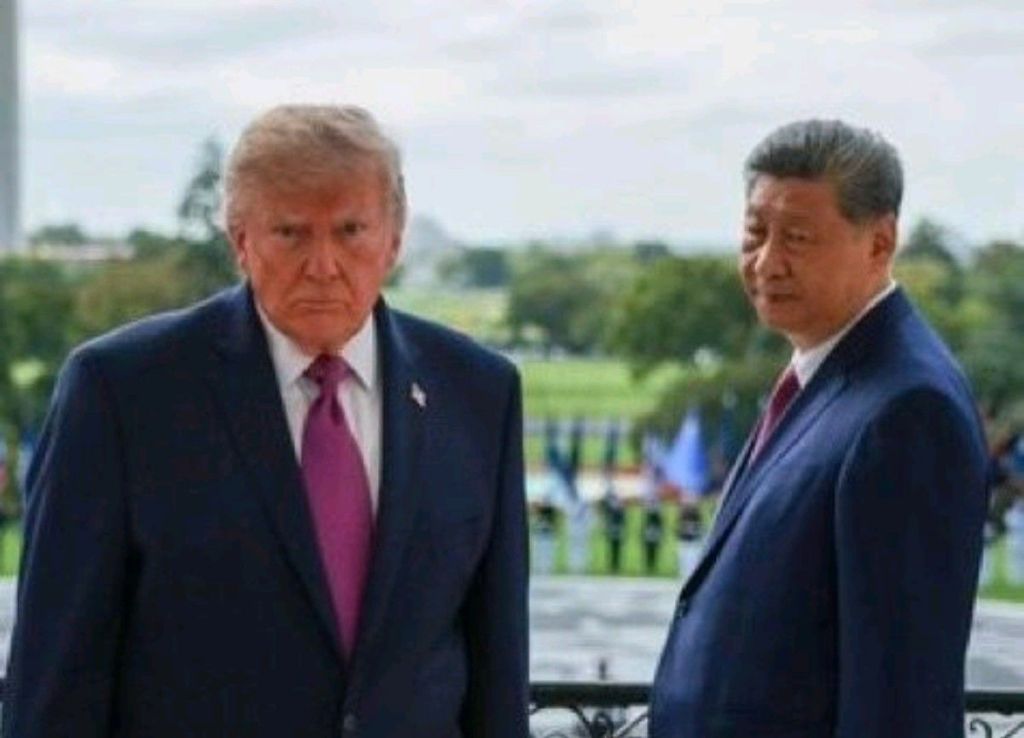
Donald Trump and Saudi Arabia

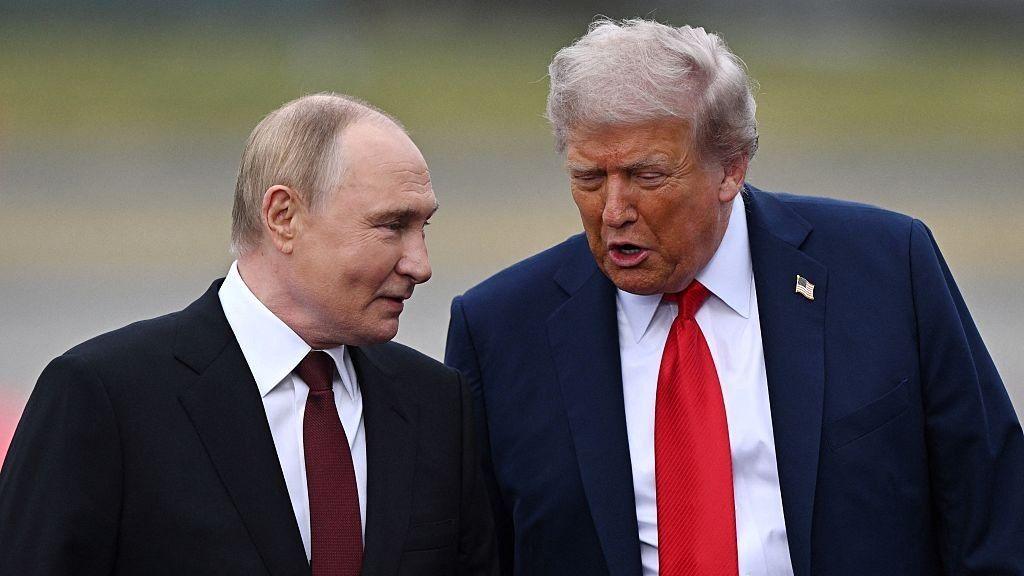
“The Art of the Deal”, Trump’s self penned manual for action, is mistitled. It’s an atrocious work that formalizes, duplicity, deceit, bullying and tactical misrepresentation. The deal the United States has made with Saudi Arabia for US companies running nuclear power operations in Saudi, apparently was finalised – with lighter conditions than other states where a US presence contributes to civil nuclear technology. Elsewhere, even the possibility of enriching uranium is completely off the table. Hints are such that, for Saudi, this door has been left ajar.

So, after it was generally understood, certainly by the Saudis that the deal had been established, Trump, following his Magnum Opus, decided to add on an additional clause – after the fact. This clause is a condition that Saudi Arabia joins the Abraham Accords. The key element of these Accords, of course, is the recognition of Israel. Saudi Arabia has maintained for a very long time that the only way they could recognise Israel, is with the creation of a Palestinian State, under the two state solution.

What does Trump expect by this requirement? That Saudi Arabia a strong Islamic country will simply throw out any element of faith allegiance and Arab brotherhood that it has with the Palestinians, in order to facilitate civil nuclear power?

Just as Trump has misread Iran’s strategic response to his bombing campaign, by adding such a clause to Saudi’s nuclear power contract, one of the possible consequences could be the withdrawal of Saudi in its entirety from this agreement, and a further cultivation of the Strategic Mutual Defence Agreement, (SMDA), that they signed with Pakistan in September of last year. This states simply that an attack on one is considered an attack on both, and in the case of Saudi, Pakistan would come to their military aid. Pakistan is a nuclear power, both in the civil power sense, operating six nuclear reactors, and also of course in the weapons sense, in its decades-long standoff with India.

So, by applying his own bizarre commercial logic, Trump could have actually consolidated a nuclear power pact in the most volatile part of the world, spreading potential nuclear capability, west, into the Gulf, from Pakistan. And of course this does not touch on the fact that Israel, whilst operating a public policy of strategic ambiguity, is widely understood to be a nuclear weapon state.

“The Art of the Deal”. Available in all remaindered bins, and poorly frequented book stores…

#SaudiArabia #Trump #Pakistan #NuclearPower #AbrahamAccords

Elon Musk of Russia?

The Economist’s long form online magazine, 1843, has a profile piece this week on Andrey Melnichenko. Really very interesting indeed – and what an astonishing character…!

To have been able to navigate the end of the Soviet Union and the secession of States into independent countries, and essentially to come up smelling of roses, whilst astonishing levels of corruption, nepotism, and place vying went on, amongst the new emerging class of Oligarchs, surely shows some of the most natural brilliance – in the entire world! The fact that he constantly converted the roubles he was making (largely as their banker), into dollars, such that he was protected when the great rouble crash happened, just shows astonishing foresight… and the diplomatic and personal skills to import huge physical amounts of dollars.

As to his political ideals – I haven’t yet read his essay in the main magazine, but I saw the summary of it…. I’m not so sure. His approach appears to be cosmopolitan, democratic, and ideal – all of the things that modern Russia has not been, and has become quite effectively self-reinforcing as a Security State. Beating such vociferously well entrenched vested interests, literally supported by arms, is a different category of fight… But, certainly one of the main things that I took away from this piece was, here is a man that it’s not wise to bet against…

https://www.economist.com/1843/2026/07/09/a-top-russian-oligarch-breaks-the-silence?giftId=MDNjYWEzYmMtNmE0My00NTEyLThmZTMtOWY5OWM5OWExNDdm&utm_campaign=gifted_article

#Russia #TheEconomist #AfterUkraine #Melnichenko

Defence Investment Plan

To lose one of the most reliable Cabinet Secretaries, in the form of John Healey – over an additional £1.5Bn, seems unfortunate. Although more is generally better than less, at least in terms of potential investment spending – what hasn’t been formally reminded to the nation is the scale of cuts in military spending over broadly 20 years… The UK was spending approximately £50Bn over 15 years ago. Had that been increased by an average inflation figure of 3.1%, spending would currently be at £80Bn – let alone accounting for the cumulative shortfall in the interim. Yes so much of the world has benefited from a peace dividend, yet look how quickly things turn…

DIP is actually an astutely political document because it doesn’t give important things that it would previously have given, such as an, “ORBAT”, or Order of Battle, the structured, hierarchical organization of a military force—detailing the specific units, command structures, and equipment assigned to a formation. This is for the critical reason that these formations are changing before our very eyes. Instead of replacing Type 45 Destroyers with the intended Type 83’s, this investment will now go towards six new Common Combat Vessels, which the MoD said would be capable of “coordinating uncrewed systems in the air, on the surface and under the sea to deliver more resilient air defence”.

Admiral Lord West reminded us that during the Falklands War, the UK deployed a carrier battle group, an amphibious fighting force and a mass of Destroyers and frigates in 4 days… During the recent Iran escalation, we struggled to deploy one Type 45 Destroyer, HMS Dragon, in 2 weeks, which actually was then returned back to port with technical issues 🤦🏻

Nearly half of this anticipated £300Bn spend over the next 5 years will be spent simply on personnel costs; nearly a quarter will be spent on enhancement and maintenance of our nuclear capability – an essential component, leaving the rest to be spent on novel technological investment, that of course UK forces have not had time to train upon, nor know how to integrate successfully. But then again, Ukraine didn’t know either and they haven’t done too badly…

However this does not detract from the fiscal reality of arriving at 2.7% of GDP spend by 2030, with a chasm approximating nearly 1% (£30Bn) to get to 3.5% NATO commitment by 2035. Backloaded, and two Parliamentary cycles away. At a time of portent, this will require a new democratic consensus as to what our priorities are…

#DIP #Defence #UKForces #RoyalNavy

Don’t forget literature in our rush for AI

What is the role of the humanities and social sciences in an AI future? Where does literature fit in? Smart money amongst the intelligentsia say that it has never been more important – and I am very much with them. But I fear this is a more difficult argument to make to the investors, looking at the the ROI needed on the vast data centres’ spend requirements…

Information is not knowledge. Knowledge is the bedrock of wisdom. Wisdom, and some time, is what we need to contemplate our way through to a sustainable future, one where we’re not melting to death…Kemi Badenoch is an Engineer; Andy Burnham is a career politician, but importantly, one who studied English. Of course we need scientists and engineers – without doubt – but surely we need thinkers and dreamers. And social scientists and philosophers, and the wise folk who can stitch all of this together.

As an Economist, I have seen my discipline, in its race for perceived legitimacy, becoming entirely lost in the application of sometimes spurious statistical analysis – and lost more often in the even more removed and extreme mathematicisation of the subject. I didn’t do my MSc Economics until I was in my 40s, and whilst everybody could wax lyrical about the role of the second differential, very few people out of a class of 100 could explain the profundity of Keynes’s ideas – or who knew who Hayek was…

Literature was my own grounding and I remember well that it took me three attempts to finish Solzhenitsyn’s “August 1914″… I may well have battled through the history of the East Prussian war 🤦🏻, but much more than this… It introduced me soon after, to the Gulags, and Stalin, and the simple reality of man’s inhumanity to man, even today – not in the history books… I’m blessed to have three children, and a thousand books, and despite my banging on about it, they hardly read!…. They are lost to the 30 second videos of Tik tok, seeing the entirety of the world – and yet understanding less and less of it…🌹

Let’s never stop celebrating ideas, and figure out a way of reintegrating humanities and social sciences into the reason why we are doing things… And more importantly, for whom…

#ideas #socialscience #humanities #AI

Economics x.0: the debate continues

What is Manchesterism?

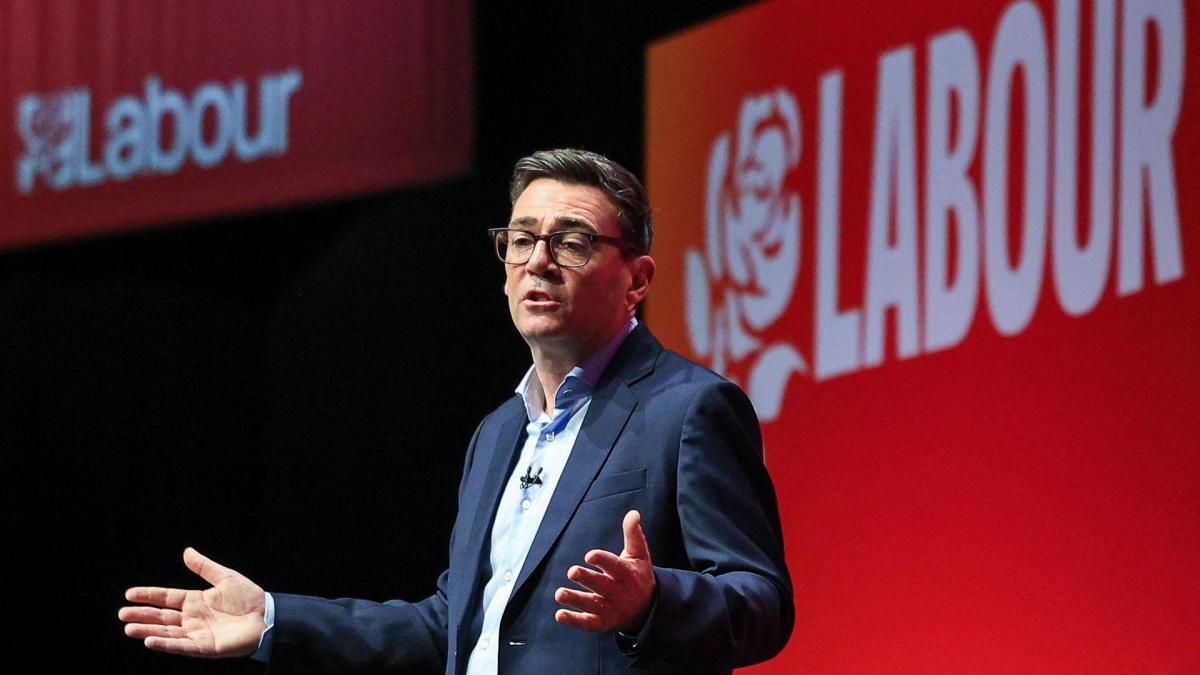
Now the speculation has finally ended and Andy Burnham is Prime Minister presumptive, we ask,what is the Political Economy of Manchesterism??

“Business friendly socialism”, has been touted numerous times. We feel this is oxymoronic. Any business-friendly policy can’t be socialistic, and any form of socialism in practise can’t be business friendly. Andy Burnham has already stated that he will stick to the Fiscal Rules, one of which is no borrowing for day-to-day expenditure. With the scale of our National Debt, and the reactivity of bond markets when they smell blood in the water, or unsustainable borrowing – and given the scale of bond holdings that are index linked – any persistent inflationary rise will directly accentuate this debt..

So, what is Manchesterism? Subsidised energy bills; rent control; greater public control of utilities and other public services… Burnham recently said utility companies could be controlled through regulation rather than public ownership – though it’s understood Thames Water will be taken into public hands (without as yet an indication as to how to write down their astonishing corporate debt). I fear it is concerning that Government seeks greater control of private sector services’ in an attempt to bring down prices – as the cost of living is the main concern repeatedly raised across the country, since Covid. Many of these sectors are already regulated heavily, and the margins are deceptive, not least in protracted real term rises in labour costs, post the 2024 election.

Burnham states there’s excessive profit in the social care sector, though they would no doubt dispute this –  yet this is not the same as the private rented sector, where though rents have increased dramatically, property costs, mortgage rates, renter’s rights and meeting minimum safety standards have already resulted in fewer private sector landlords, reducing housing stock available for rent and consolidating remaining stock among fewer, now stronger, property conglomerates. None of these sectors will be particularly receptive to a denial of the price signal, through rent controls. Surely an answer here is to increase supply by easing planning restrictions.

Remaining ways to raise tax revenue might include taxing investment income in the same way as income from work, for instance landlords don’t pay national insurance on investment income from housing – and this might glean an additional 10 to 20 Billion pound, or roughly 1.5% of Gov expenditure on Public Services. Hardly enough to move the dial.

So – we feel the question really comes down to, will the medicine kill the patient? According to data from the Institute for Fiscal Studies, the tax-to-GDP ratio—the gold standard for comparing the total tax take across different periods—is historically high, post WW2. Burnham hasn’t yet taken office, but on this diagnosis, I’m not convinced Manchesterism will translate across the UK.

#AndyBurnham #Manchesterism #PM #Publiccontrol #tax