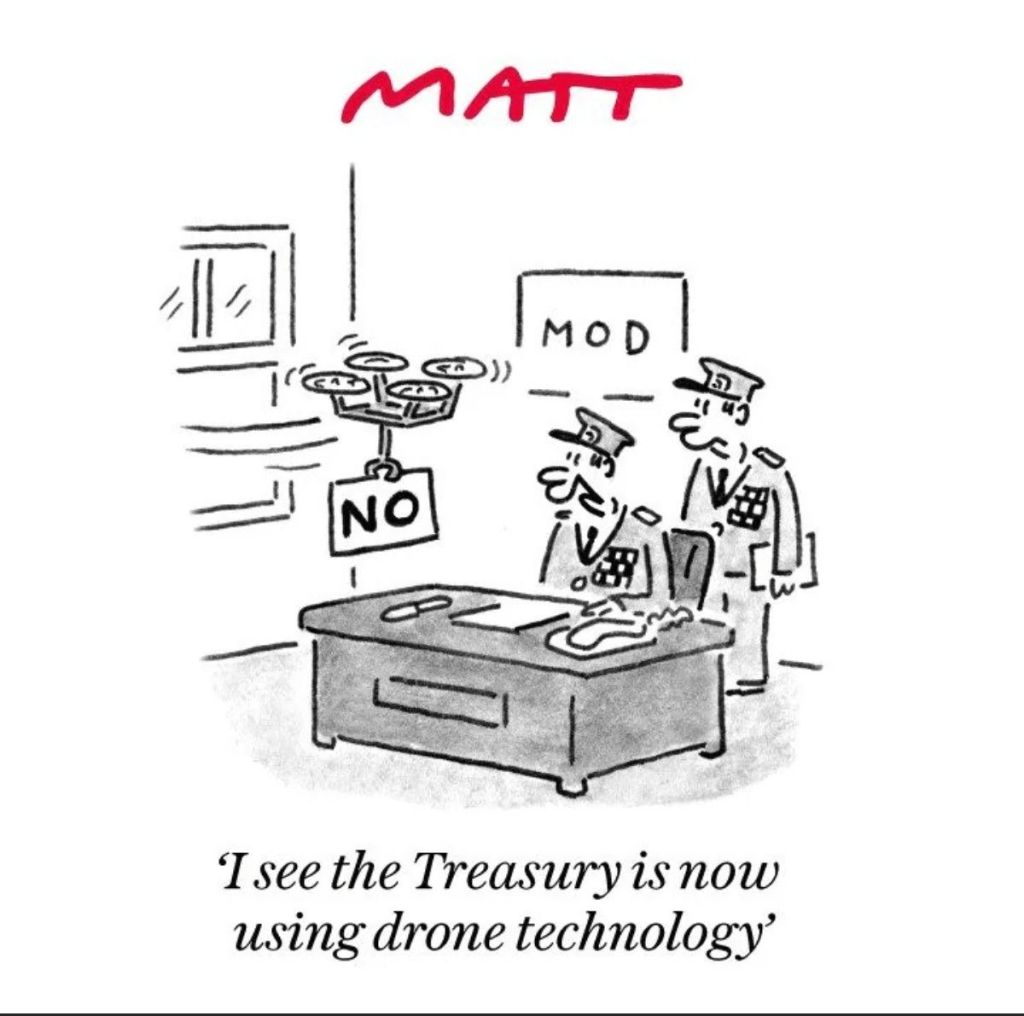
To lose one of the most reliable Cabinet Secretaries, in the form of John Healey – over an additional £1.5Bn, seems unfortunate. Although more is generally better than less, at least in terms of potential investment spending – what hasn’t been formally reminded to the nation is the scale of cuts in military spending over broadly 20 years… The UK was spending approximately £50Bn over 15 years ago. Had that been increased by an average inflation figure of 3.1%, spending would currently be at £80Bn – let alone accounting for the cumulative shortfall in the interim. Yes so much of the world has benefited from a peace dividend, yet look how quickly things turn…
DIP is actually an astutely political document because it doesn’t give important things that it would previously have given, such as an, “ORBAT”, or Order of Battle, the structured, hierarchical organization of a military force—detailing the specific units, command structures, and equipment assigned to a formation. This is for the critical reason that these formations are changing before our very eyes. Instead of replacing Type 45 Destroyers with the intended Type 83’s, this investment will now go towards six new Common Combat Vessels, which the MoD said would be capable of “coordinating uncrewed systems in the air, on the surface and under the sea to deliver more resilient air defence”.
Admiral Lord West reminded us that during the Falklands War, the UK deployed a carrier battle group, an amphibious fighting force and a mass of Destroyers and frigates in 4 days… During the recent Iran escalation, we struggled to deploy one Type 45 Destroyer, HMS Dragon, in 2 weeks, which actually was then returned back to port with technical issues 🤦🏻
Nearly half of this anticipated £300Bn spend over the next 5 years will be spent simply on personnel costs; nearly a quarter will be spent on enhancement and maintenance of our nuclear capability – an essential component, leaving the rest to be spent on novel technological investment, that of course UK forces have not had time to train upon, nor know how to integrate successfully. But then again, Ukraine didn’t know either and they haven’t done too badly…
However this does not detract from the fiscal reality of arriving at 2.7% of GDP spend by 2030, with a chasm approximating nearly 1% (£30Bn) to get to 3.5% NATO commitment by 2035. Backloaded, and two Parliamentary cycles away. At a time of portent, this will require a new democratic consensus as to what our priorities are…
#DIP #Defence #UKForces #RoyalNavy