HS2 – Stop, I want to get off…

Benefit Cost Analysis is an astonishingly powerful appraisal mechanism, whose continued use is more than justified; even its place integrated into Treasury Green Book thinking. Where it falls down however, can clearly be seen in the fumbled handling of HS2.

Whilst nominally an infrastructure project, it is more than this: it is a statement of intent. A nod to our future, our nation saying to itself, “We are one country, not an association of disparate regions. Despite the wealth of the South, it is no more important than the North” (By the way, the North doesn’t stop at Manchester…)

Benefit Cost ratios below 1 are normally a dead duck, for very simple and valid reasons. HS2 is not a simple infrastructure project, but rather one aspect of national solidarity. I, along with so many of my peers, left the North when I became an adult – essentially never to return. This is an intra-national siphoning of intellectual capital that the country simply cannot afford….Generation after Generation – nor should it wish to seek to do so. The resulting concentration of power, wealth, professional occupations and International representation, can only present a picture to our trading partners as a nation that isn’t really a nation…

Sophisticated global conglomerates can play the periphery off against the center – such as Nissan, decades ago in the Northeast – or only last week, Tata Steel, in Port Talbot. The government gives investment grants and tax relief to these behemoth companies, as if feeding a pet, in the filial relationship it conveys to its regional, poorer, cousins. It says, “Don’t worry, we’ll look after you…” Yet of course these regional geographies do not want to be looked after. They want to stand proudly – be their own tall poppy. Stopping HS2, at it’s halfway point, doesn’t indicate national fraternity. Even if the Benefit Cost ratio is below one, I don’t believe this is written in stone for all eternity, as cultural integration, and the economics of agglomeration take seed.

I should add, as more than a footnote – despite this righteous outrage, I actually felt HS2 was always a misconceived idea, given that rail journey times have reduced so drastically over the last 20 years anyway. It was a solution to a problem that no longer existed. Rather the funds would always have better been allocated to the Northern Powerhouse rail schemes, of West / East integration, so completely vital for pulling the North together.

Yet as HS2 has gone ahead – to stop it halfway, after having already cut off it’s Eastern half, from Birmingham onto Leeds, were HS2 Birmingham to Manchester to be scrapped now, surely it would be the worst of all possible outcomes?

Short termism and the politics of climate change

I’m not a scientist, but even I realise that whether or not we achieve “Net Zero” by 2050, is very much secondary to the fact that if we have decided as a nation to emit more CO2 as a gas, in volume terms, up to that point – then that is all that matters.

There are the economics of climate change, and then there are the politics of climate change, and whilst both these are enormously important in day-to-day pragmatism, and the representation of policy outcomes, the very simple fact is that the physics of climate change don’t care about the electoral chances of Rishi Sunak.

This back peddling, couched in terms of an appreciation of the reality of people’s day-to-day expenses, is genuinely shocking in 21st century politics – after nearly a decade and a half of increasingly inept Conservative rule.

All of the points outlined here are not only correct, they are quite simply deterministic. Why would a business invest now in seeking to comply with government legislation, if that legislation has been pushed further down the tracks? Even though it seems to be the case, business itself realises that it is not in its best interests to comply with this delay. Just like California, at the State level, moved ahead with all kinds of climate sensitive policies, whilst at the Federal level, the US Government hadn’t decided whether or not climate change was a systemic threat.

However, I should swing back around to the politics of this policy reversal: they’re simply amateurish. By all accounts, on polling from this week, three quarters of voters have now lost trust in Rishi Sunak’s competence on climate policy, and rather than achieve the solidarity with voters he was aiming for, he has simply shown himself to be opportunistic and incompetent, surely not a winning combination after Truss and Johnson…

#netzero #climatechange #policy #condervatives #rishisunak

Can you use a chainsaw to teach economics…?

Can you use a chainsaw to teach economics…?

Why is this chain saw £130 pound when it does the same job as a £600 one?

What is Price Discovery; what is Differential Pricing? What is Price Elasticity of Demand? Why are some safety products orange… Can I still use a chainsaw with one less leg?? (Why it’s best to buy the right safety equipment…)

How much will this chainsaw go up if it is the product of nearshoring… Did I mention the one less leg thing? Should I pay somebody else to do this job? Why is the wood so expensive when there is so much of it lying around in the park? Why am I having a fire outside my house, when I have a perfectly good house with central heating…? (The rationale for choice and the interlinkages between psychology and economics…) Can anyone use a chainsaw? (Is there a role for Regulation and who determines what they regulate…)

Stop looking at my leg!!

#economics #psychology #regulation #nearshoring

An ordinary coup…

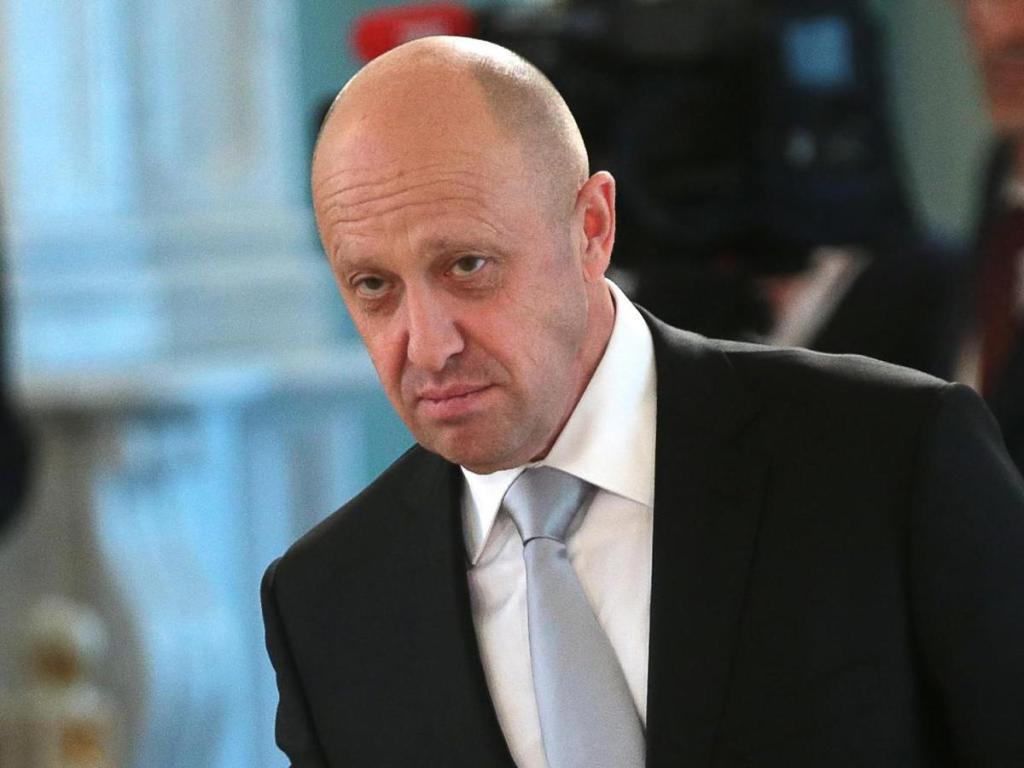
Yevgeny Prigozhin in safer times

Astonishing news today from Russia. Prigozhin, leader of the Wagner mercenary group has all but announced a coup! Given that the Wagner mercenary group’s numbers were magnified to the extent they were, mainly by conditionally released prisoners’, purely with the purpose to use them in forward positions. Whilst essentially untrained, these troops were seen as tactical pawns, to be taken by the Ukrainians  – therefore moving Ukrainian forces forward into a better kill zone for the more experienced Russian army soldiers… This begs the question, how likely is it that Prigozhin will be followed, by even his own mercenaries, let alone large sections of the Russian army more broadly…. Elements of whom he has today sworn revenge against.

One thing it absolutely does signify is a crumbling of the power of the Russian state. Senior and experienced western Russia watchers have said for quite some time now: “Be careful what you wish for, in seeking the overthrow of Putin. There is a very real likelihood, in this time of Russian ultra nationalism, that any replacement of him could be even worse…”

Prigozhin is unlikely to get very far, and who knows – he may even be assassinated within the week – this is what happened to Nemtsov, an opposition politician with a very public and national profile, who was casually murdered on one of the city’s main bridges in Moscow, in 2015. Prigozhin has been a very useful foil for Putin in injecting dynamism and radicalism into the Russian army, from outside their ranks. Yet biting the hand that feeds him is a step too far… And given that Prigozhin originally was Putin’s chef, this is not a bad analogy…

An Industrial Strategy for now

We have long thought about “Industrial Strategy”, and whether or not it was the correct way forward in an environment where liberalisation has time and time again showed innovative and competitive advantages are normally best left to the firms pursuing them.

Arguably, however, we are at a tipping point… Philosophers and political scientists have for decades argued about the nature of change, and the consensus is that change itself has accelerated… This is why now perhaps revisiting industrial strategy may well be the smart move.

Let us start with possibly a less intuitive position: I am not particularly in favor of electric vehicles. I believe that they are a transition technology, and little more… Not noted for his economics’ or political science credentials, the comedian Rowan Atkinson, recently pointed out in a series of articles, how simply using our existing car stock for longer is almost certainly more environmentally friendly than the intensive resource depletion of rare earth metals, in the production of millions of new car batteries… And this is not to mention the rest of the materials that go into the making of a car… Not least the fact that these batteries themselves have a life expectation of 10 years, and therefore represent built-in obsolescence.

Rather, and perhaps we may expand on these in a series of articles to come, now is the time to consider consistent, rigorous and stable Government supported policies to promote incentives in capital development in areas of applied AI. At MBC I personally would argue a focus for support on the next iteration of generative AI, and its potential productivity gains across the services sector. Secondly, quantum computing, which is in its infancy and whose potential has been discussed for years – yet it remains in a form of ‘investment nursery’. The UK is a world leader in life sciences, so arguably matching quantum computing to the development of necessary and new antibiotics in humanities fight against antibiotic resistance, would be a phenomenal application of a targeted industrial strategy.

And last in this immediate tranche of sectors ripe for strategic support, the greatest of all: our climate crisis. The fracturing of European wide academic and scientific relations, post Brexit, needs to be resolved with a sense of urgency. This is quite simply a future bet we cannot get wrong, which requires international cooperation. Again the UK has a reputation for excellence in the geophysical sciences, and areas such as carbon sequestration need to be scaled up and made viable – and implementable – not least in the developing world, as it seeks to leapfrog up the value chain. Yes, renewable energy is the way forward, yet there are many countries in emerging markets still building more traditional power generation, than renewable.

As we can see at a time of monetary tightening and institutional interest rate rises, there is little spare  to fund Government largesse… But that is not what is needed – rather simple, clear, consistent and robust tax and investment incentive strategies to help enhance our already existing competitive advantage in these areas. I for one feel the productive gains that are possible from AI could represent a developmental step change… Ushering in all kinds of societal responses, including the possibility of a universal basic income for those workers displaced. In order to ride this wave, not least to possibly help direct it, we need to be sitting on its crest.

The awful reality of pragmatic politics… Re-admitting Syria into the Arab League.

The awful reality of pragmatic politics.

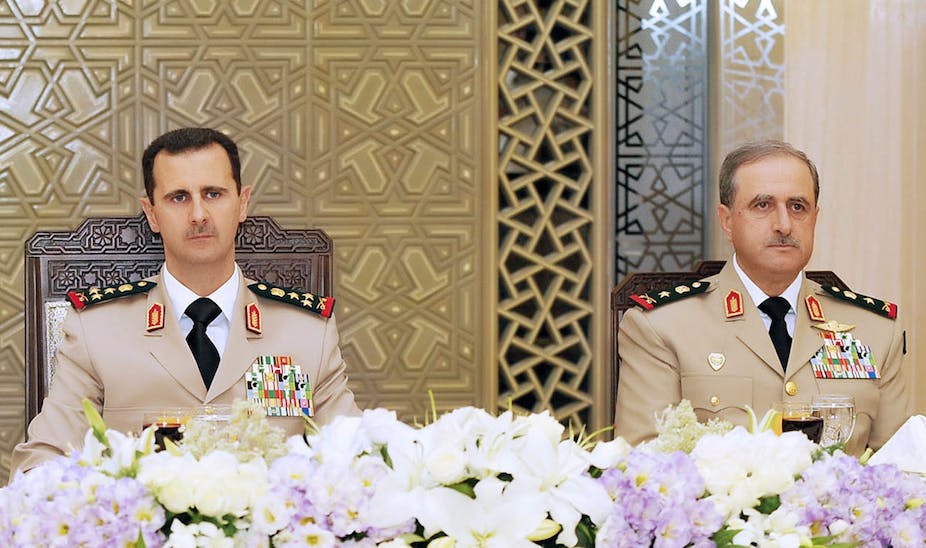
Syria is to be re-admitted into the critically important regional economic and political block that is the Arab League. The Syrian regime under Bashar al-Assad, has systematically ruined their country, killing an unknown number of his own citizens – conservatively estimated to be half a million people… 13.5 million Syrians are either internally or externally displaced, with again a conservative estimate of six and a half million of these refugees, forced to flee the country…

And yet after 12 years of brutal and brutalising war, the Arab League, under the auspices of Saudi Arabia, have decided to re admit Syria. The subtleties of geopolitics are important here: the League has reasoned under Saudi leadership, that the readmission of Syria will help to leverage it away from external influence, notably that exercised by Russia. It will also temper the regional influence of Iran and Turkey. Hopefully and more importantly from an institutional capacity building perspective, it will open the doors to regional aid and economic and humanitarian support. On top of this are the huge numbers of refugees in neighbouring countries, notably Lebanon and Jordan, adding significant domestic pressures onto these countries. Particularly in the case of Lebanon, itself a broken state, this burden has been too much to bear.

Much is it truly pains me to say, this might actually be the smart move. I also do not feel that it is untoward the Saudi administration has ignored the immediate reaction of both Britain and the US. It’s fine to moralise, from several thousand miles away, whilst making no material difference to the devastation on the ground. Obama lost the West its right to claim the high ground, when it refused to act, despite claiming the use of chemical weapons would be a “red line” the Assad regime should not cross. The regime, of course, crossed this line and the west did nothing… Occasionally in order to feed the hostages of the wolf, you have to invite the wolf out of the cave in the first place…