Don’t forget literature in our rush for AI

What is the role of the humanities and social sciences in an AI future? Where does literature fit in? Smart money amongst the intelligentsia say that it has never been more important – and I am very much with them. But I fear this is a more difficult argument to make to the investors, looking at the the ROI needed on the vast data centres’ spend requirements…

Information is not knowledge. Knowledge is the bedrock of wisdom. Wisdom, and some time, is what we need to contemplate our way through to a sustainable future, one where we’re not melting to death…Kemi Badenoch is an Engineer; Andy Burnham is a career politician, but importantly, one who studied English. Of course we need scientists and engineers – without doubt – but surely we need thinkers and dreamers. And social scientists and philosophers, and the wise folk who can stitch all of this together.

As an Economist, I have seen my discipline, in its race for perceived legitimacy, becoming entirely lost in the application of sometimes spurious statistical analysis – and lost more often in the even more removed and extreme mathematicisation of the subject. I didn’t do my MSc Economics until I was in my 40s, and whilst everybody could wax lyrical about the role of the second differential, very few people out of a class of 100 could explain the profundity of Keynes’s ideas – or who knew who Hayek was…

Literature was my own grounding and I remember well that it took me three attempts to finish Solzhenitsyn’s “August 1914″… I may well have battled through the history of the East Prussian war 🤦🏻, but much more than this… It introduced me soon after, to the Gulags, and Stalin, and the simple reality of man’s inhumanity to man, even today – not in the history books… I’m blessed to have three children, and a thousand books, and despite my banging on about it, they hardly read!…. They are lost to the 30 second videos of Tik tok, seeing the entirety of the world – and yet understanding less and less of it…🌹

Let’s never stop celebrating ideas, and figure out a way of reintegrating humanities and social sciences into the reason why we are doing things… And more importantly, for whom…

#ideas #socialscience #humanities #AI

Economics x.0: the debate continues

What is Manchesterism?

Now the speculation has finally ended and Andy Burnham is Prime Minister presumptive, we ask,what is the Political Economy of Manchesterism??

“Business friendly socialism”, has been touted numerous times. We feel this is oxymoronic. Any business-friendly policy can’t be socialistic, and any form of socialism in practise can’t be business friendly. Andy Burnham has already stated that he will stick to the Fiscal Rules, one of which is no borrowing for day-to-day expenditure. With the scale of our National Debt, and the reactivity of bond markets when they smell blood in the water, or unsustainable borrowing – and given the scale of bond holdings that are index linked – any persistent inflationary rise will directly accentuate this debt..

So, what is Manchesterism? Subsidised energy bills; rent control; greater public control of utilities and other public services… Burnham recently said utility companies could be controlled through regulation rather than public ownership – though it’s understood Thames Water will be taken into public hands (without as yet an indication as to how to write down their astonishing corporate debt). I fear it is concerning that Government seeks greater control of private sector services’ in an attempt to bring down prices – as the cost of living is the main concern repeatedly raised across the country, since Covid. Many of these sectors are already regulated heavily, and the margins are deceptive, not least in protracted real term rises in labour costs, post the 2024 election.

Burnham states there’s excessive profit in the social care sector, though they would no doubt dispute this –  yet this is not the same as the private rented sector, where though rents have increased dramatically, property costs, mortgage rates, renter’s rights and meeting minimum safety standards have already resulted in fewer private sector landlords, reducing housing stock available for rent and consolidating remaining stock among fewer, now stronger, property conglomerates. None of these sectors will be particularly receptive to a denial of the price signal, through rent controls. Surely an answer here is to increase supply by easing planning restrictions.

Remaining ways to raise tax revenue might include taxing investment income in the same way as income from work, for instance landlords don’t pay national insurance on investment income from housing – and this might glean an additional 10 to 20 Billion pound, or roughly 1.5% of Gov expenditure on Public Services. Hardly enough to move the dial.

So – we feel the question really comes down to, will the medicine kill the patient? According to data from the Institute for Fiscal Studies, the tax-to-GDP ratio—the gold standard for comparing the total tax take across different periods—is historically high, post WW2. Burnham hasn’t yet taken office, but on this diagnosis, I’m not convinced Manchesterism will translate across the UK.

#AndyBurnham #Manchesterism #PM #Publiccontrol #tax

Secretary of State for Defence John Healey resigns

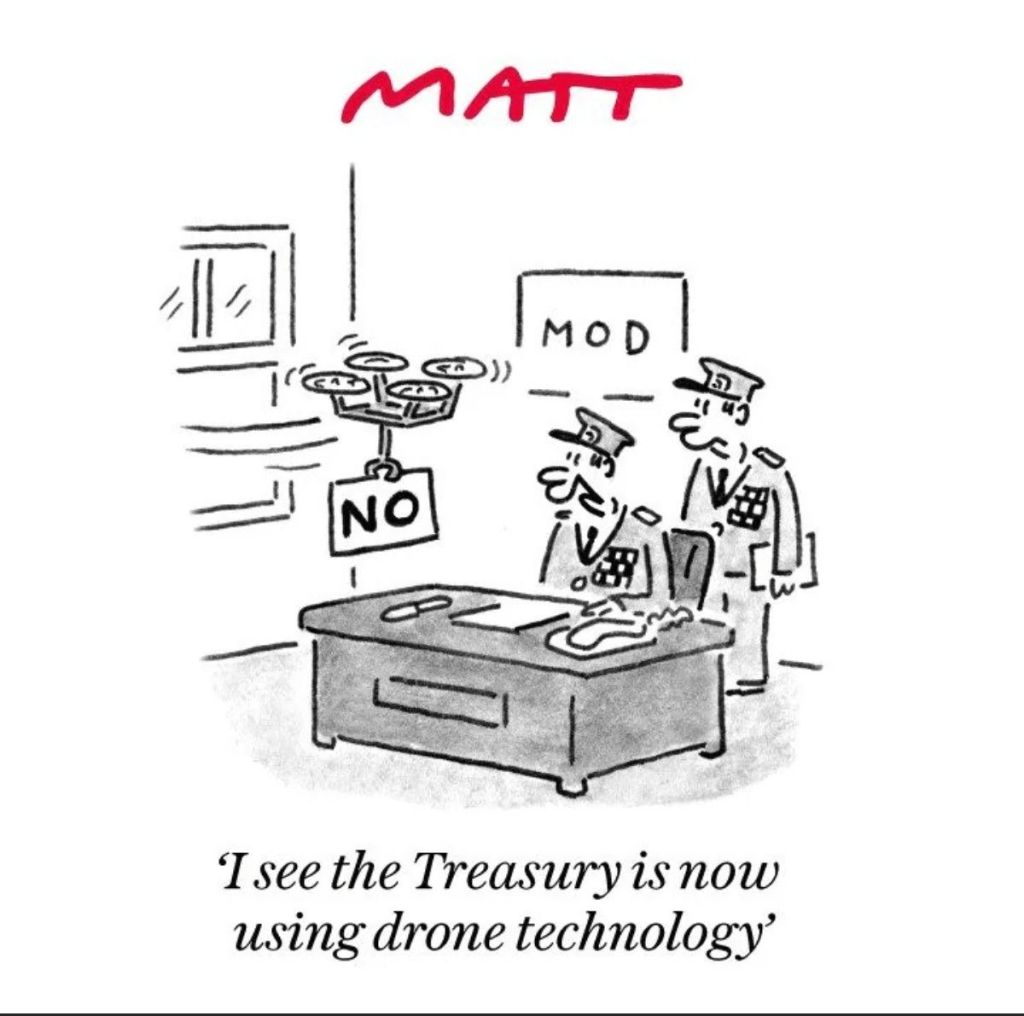
Defence Secretary John Healey resigns over inability of Keir Starmer to allocate resources to the long awaited Defence Investment Plan (DIP).

It also further undermines Keir Starmer, who is determined to hold on to his sobriquet as “Most Beleaguered Prime Minister”.

The UK is currently faced with riots in Belfast, resulting from dissatisfaction with the speed and method of integration, of immigrant communities, particularly in poorer regions of the country. In a week’s time, Starmer may well find he has a new MP in the form of Andy Burnham, whose very presence is an intent to replace him.

As Healey notes in his resignation letter, despite extensive consultation and an understanding between the two, the Prime Minister is backtracking from the intention of raising Defence spending to 3% of GDP by 2030. Healey cites that according to the financial breakdown given to him on Monday 8th June, the commitment to increase only takes spending to 2.68% of GDP. Healey then goes on to say, on existing spending implementation, this is already set to rise to 2.6% next year, 2027. This means less than a 10th of a percentage point increase in Defence spending as a proportion of GDP in a 3 year period – at a time of operational commitment involving a monitoring and management role in the Straits of Hormuz; a security and monitoring role in the High North arena, (an Arctic presence, after provocations from Russian air and sea activity), and notably, a leading advocacy role for the promotion and consolidation of a European projection of strength within NATO.

2.68% of GDP by the end of the Parliament – when it was understood this would be 3%, with an active movement towards 3.5%, is insufficient and leaves the UK overexposed and under-resourced.

Defence consolidation, integration and stability is not meant to be a legacy. It’s an operational tool, needing constant management and the financial reassurance of investment. The DIP was meant to deliver this. With the resignation of the Secretary of State for Defence, it is clear this will not be the case.

#Defence #UKPolitics #DIP #Healey

Using the political opposition in Taiwan to achieve your ends

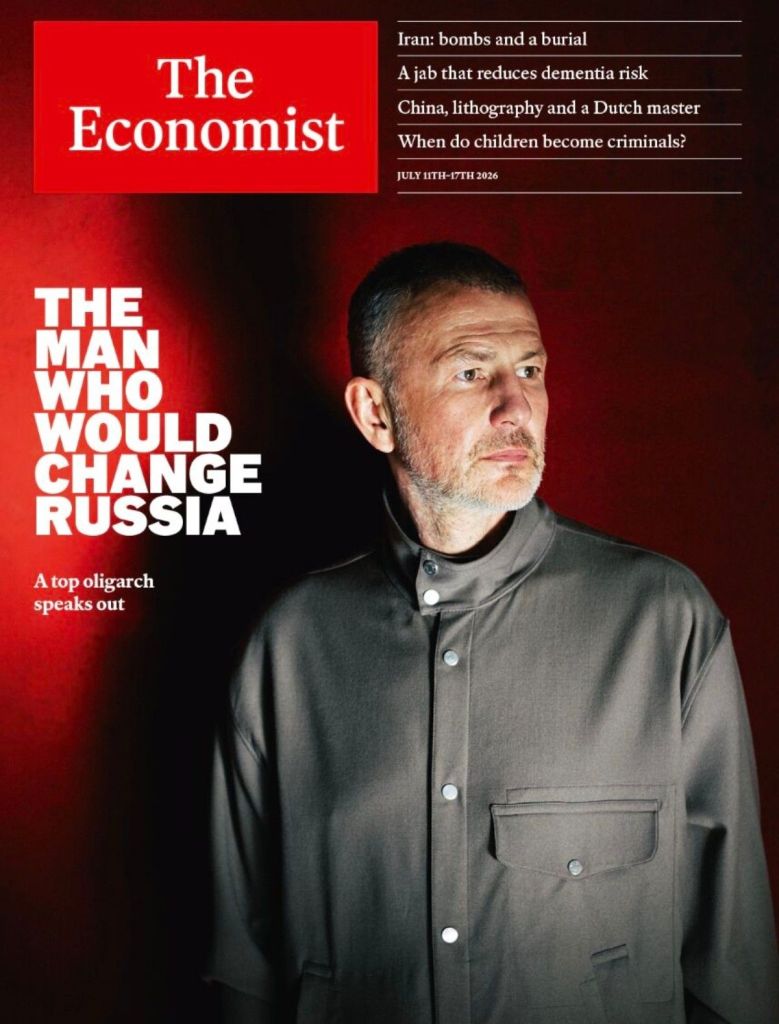
Cheng Li-wun, the head of Taiwan’s opposition Kuomintang begins a two-week “peace mission” to Washington, with talking points that echo Beijing’s approach to the island.

So to jump right in, we simply believe a traditional invasion is increasingly unlikely… Most previous views of invasion have been based on a historical and traditional use of naval power. Modern warfare is a step change different to this and indeed China holds so many cards that despite the “porcupine policy” (a prickly opponent that you don’t particularly want to engage with – or “swallow”) of Taiwan, on so very many fronts China is able to overwhelm them. Physical trade blockades, cyber warfare, aerial incursions, strategic bombing. Underwater drones, in mass, that can dominate against possible US or external (should Japan get involved) submarine interference of any naval crossing. Sheer volume of materiel, and the ability for resupply, allowing for and accounting for losses – and a continuation of the drive.

Despite the decades-long US Policy of “strategic ambiguity”, Trump appears distinctly “strategically nonchalant”. Post Iran, It is even more unlikely that the US would seek to involve itself in a war on the other side of the world, that offered, as it sees it, little gain. Post Iran, The US is likely to consolidate towards two spheres of influence in the world. US hegemony in the West and Chinese, in the East.

Much is made of the lack of military experience on the part of China – it’s untested military capacity. Yet surely if any insight is to be gained from recent US excursions into Afghanistan and now Iran – it is the truism of, “everyone has a plan until first contact”, resulting in quite a different outcome than that anticipated. With a society built on truly the long game, this inexperience should not be relied upon.

However, increasingly, all of this is essentially irrelevant – as China, above the fact that it is becoming a great military power – politically it has played a fairly astonishing hand in the last couple of years. Not involving itself on the side of Ukraine, despite tacit disapproval of the invasion from the outset – whilst simultaneously not allowing Russia to leverage its energy strength against China; by the decade long build up of strategic oil reserves etc etc. By promoting reunification through use of political opposition in Taiwan, we believe the reality is that no invasion will be necessary.

#Taiwan #strategicambiguity #ChengLiwun #AfterIran

Phone use shrinks world population!!

Phone use shrinks world population! This article in the FT speaks very credibly, relying on extensive research to show that the growth in the time spent on phones corresponding with the rollout of 4G, directly correlates with a distinct and notable fall off in the birth rate – directly marrying the time stamp of the emergence of 4G in those countries.

One commentator in the article reminds us that in order to find a partner, one has to sift through a number of people, which requires socialising. The example given in South Korea, shows clearly that the average time young people are spending socialising is half of what it was 20 years ago. This is statistics. If you are spending half the time socialising – it’s not even as if it is going to take twice as long as previously to find that possible match, because when you add into this the fact that the demographic pool amongst whom to socialise is itself shrinking – this almost certainly means it is going to take more than twice as long (though to be a real nerd, of course this would depend on any relative shift in population of the sexes!)

And then of course we have aspiration: “No, he or she isn’t good enough for me. Look at so-and-so who pulled that 9 on Instagram. I’m not settling for anything less than an 8” (and you’re a 6! 😭🤦🏻)… Everybody always thinks the grass is greener on the other side, except – in the virtual world, there is no grass; there is no other side, and there are no free and single 8’s readily available and waiting for your attentions…

For all that is holy, put your phones down, and get dating! GDP will thank you for it – just ask Japan!

#demography #GDP #depopulation #technology

https://giftarticle.ft.com/giftarticle/actions/redeem/b61b6a98-e327-4505-9271-2391130f14fb

(the inflection point in this graph corresponds directly with the rollout of 4G)

More damaging to the Union than Robert the Bruce

There is a real brittleness in British politics at the moment, and it seems that the reality is this is not going to change. It is no small thing that the primacy of the two leading parties has been challenged so comprehensively, that the genie is not going to go back in the bottle.

In Scotland, The SNP were returned to power, winning 58 seats out of 129 members of the Scottish Parliament. John Swinney, reinstated as First Minister has already stated that, though not in possession of a majority, he will not seek to form a working coalition and shall approach each Bill as it comes. On many areas there are crossovers between the SNP and the Labour Party, yet this is to discount the profoundly tribalistic aspect of politics at every level.

Even the SNP, on its fifth successfully contested Parliamentary election, knows the divisiveness of seeking a referendum on Independence, yet the rather key fact is that of the three other components of the Union, in each of Scotland, Wales and Northern Ireland, their majority party is now an avowedly Nationalist party, seeking independence from the United Kingdom.

#KeirStarmer has, through the tinnest ear in modern British history, inadvertently dismantled the red wall, whose mortar was still wet after having been destroyed in the 2019 General Election, via a near total routing of the #LabourParty and it’s Northern and Midlands’ heartlands, by the Conservatives, and then subsequently rebuilt in 2024 – with Labour’s new supermajority. Well, at least as regards the Local Elections, this red wall is now #Reform teal (a weird mix of light blue and turquoise!).

Whilst Keir has promised “to listen”, and renew his message, he seems to have forgotten that that was his offer to the British electorate just 22 months ago: “Change”. One word, and one man, graced their 2024 manifesto. As any Brit knows, who had not lived upside down in a swamp for the previous 14 years, the country was screaming for change, after the abandonment of duty and the complete loss of credibility by the previous Conservative Administration.

What literally nobody expected, given the keys to the country, the shiny new driver meandered aimlessly through backwaters, hitting the beach, and not pausing either for breath or self-reflection, would drive his Party straight into the sea – thereby in one entirely unanticipated move he has potentially done more damage to the Union, than Robert the Bruce in 1328. An astonishing achievement if it had been intentional, and yet quite unparalleled as was actually inadvertent. The 2024 Manifesto did not say, “I promise to cause such dismay as to my aimlessness, that the entire country will rebel, ushering in a new age of the least tested party in British history – who seek a little Englander future – in direct contrast to everything that the United Kingdom has stood for, post Union – which I have also successfully hobbled”

But don’t worry, he has promised to “reflect and respond.”

So that’s ok then….😊🤦🏻