BLOG

Hezbollah and Israel – a battle fought out?

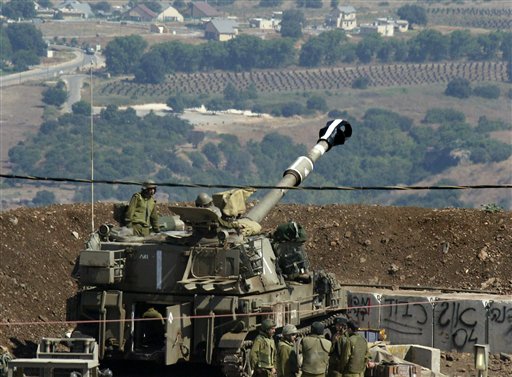
As we approach the five week point in the fighting between Israel, a sovereign state and Hezbollah – effectively an occupying force in south Lebanon – there appear signs of hope, with the acceptance of the UN drafted peace accord by both parties.

Hezbollah agreed to the terms of the deal, significantly before Israel. Israel, for their part – at time of writing (Sunday 13/08/2006) are going all out to cram as much aerial bombardment into the time remaining, before the Official Ceasefire (00:00 New York time 14/08/2006). We consider Israel’s actions to be disproportionate and excessive: there are numerous cases of targeting fleeing vehicles, simply because they are fleeing. On most occasions these have been carrying innocent civilians.

Chest beating is an effective form of foreign diplomacy – for precisely as long as the other side decide to comply with the inferior status that this display demands of them. In this case the provocation was all Hezbollah’s – their tactics were mercenary and brutal, using the local population of southern Lebanon as proxy fighters, when of course they were simply civilians being used as ground cover by fighters they didn’t necessarily support.

It is a cliché of both conflict and journalism, to say that truth is the first casualty of war. In this case it was ethical concern for one’s fellow man and integrity of action. Hezbollah knew precisely what they were doing in mounting the ambush that resulted in eight dead and two captured Israeli soldiers. This does not clear Israel from the accusation of crimes against humanity; “they started it” is also a little tired as a justification. A response has to be deliberate, efficient and just – and as the casualty figures show a ten to one ratio in favour of the Israeli’s, it is clear that their response has been anything but.

The BBC compiles the outcome so far as:

Lebanon deaths:
1,071 (Lebanese govt)
900 – 1,150 (news agencies)
Israeli deaths:
Soldiers: 114 (IDF)
Civilians: 43 (IDF)
Lebanon displaced:
700,000 – 900,000 (UNHCR; Lebanese govt)
Israeli displaced:
500,000 (Human Rights Watch)
Lebanon damage:
$2.5bn (Lebanese govt)
Israel damage:
$1.1bn (Israeli govt)

Ideas have consequences…

We have written before about the critical importance of ideas: what they are; where they emanate from; what and who influences them. However, just as it is important to both understand and appreciate ideas, it is equally important to value the efforts of the educators in disseminating those ideas.

Original thought is often complex, provocative, demanding. It can lie dormant in someone’s mind for a very long time, before something prods them out of their complacence – a sharp recognition of the value of one’s position of relative safety. Here, although the ideas in support of both a liberal economy and society haven’t entirely won out, we are on the winning side of the battle. At a time when reactionary and dirigiste forces raise old demons of sub-collectivist rhetoric and neo-socialism, these ideas again demand the weight and attention required to help suppress such forces.

Brazilian President Luiz Inacio Lula da Silva is to stand for re-election in presidential elections due in October. President Hugo Chavez is flexing his economic muscles, at the expense of the United States, purely because of Venezuelan oil wealth. The Americas are again being subjected to the old, statist ideologies.

To counter this, Ideas for a free society (http://ideasforafreesociety.org) have published a CD containing some of the seminal texts from the field. As Linda Whetstone has written: “the CD contains a selection of contributions by some of the primary scholars and thinkers who have developed ideas which relate to the free society. Their contributions explain some of the general intellectual concepts and challenges, and the application of these ideas to public policy.”

“This CD is designed for those who are interested in what these beneficial economic and political arrangements are that lead to economic growth and have the capacity to eliminate poverty. It does not pretend to provide a definitive answer but rather to point people in the right direction. The title of the CD, “Ideas for a Free Society,” was inspired by the observation that the political and economic arrangements that seem to be most conducive to peace and prosperity are those that exist in free societies.

In such societies, there exist certain institutions that guarantee political, economic and social freedom, and those institutions are in turn underpinned by ideas. Such ideas have been explored by individuals from many different perspectives, starting with ancient Chinese, Roman and Greek philosophers and continuing to the present day. The reader will find that a rich intellectual debate about the nature of these ideas exists even among the authors of texts on this CD.”

Information is power, and readily transferable, easily accessible information, more so. We wish this project luck.

MBC attends Globalisation Institute Summer Party

On Monday, we sallied forth into the cut and thrust of the Westminster Summer Party circuit. Our destination – the Globalisation Institute, whch held its summer reception in a rather grand London house. As Alex Singleton, Director General of GI wrote on the widely read and influential Globalisation Institute Blog:

“Last night we hosted a summer drinks party along with the (then) Shadow DFID Team at the former home of Prime Minister Gladstone, now the Foreign Press Association in London. Guests included friends and supporters of the Institute, representatives from organisations like Oxfam, CAFOD and Christian Aid, the Prime Minister’s Office, journalists like the FT’s World Trade Editor Alan Beattie, Danny Krueger of the Daily Telegraph, and so on. Andrew Mitchell MP (Shadow International Development Secretary) gave an informative and excellent speech putting the case for a Pan-African Trading Area. The speech is available here.”

“The Globalisation Institute is a think tank founded in 2005 with the aim of examining how globalisation can be harnessed to work for the world’s poorest.

We are philosophically ‘liberal’, regarding the Manchester School anti-Corn Law campaigners like Richard Cobden and John Bright as our key intellectual influences. We were officially launched at a reception at Soho House in June 2005 with speeches by Bill Emmott, Editor of the Economist, and Alan Beattie, World Trade Editor of the Financial Times.

We believe that globalisation is a force for good. Only by integrating the poorest into the world economy can we put an end to the poverty that still blights much of world today.”

We at MBC have been fortunate to have played a role in the identification and development of policy on the economically liberal wing of UK politics, for almost two decades. It is this involvement that brings a clarity and intellectual depth to our business dealings, that many of our competitors in consultancy can sometimes lack.

Of course it shouldn’t need to be said, but neverthess: the Globalisation Institute is an independent charity free from political and business allegiance

copyright Globalisation Institute.

Debt of gratitude…

We at MBC have been very privileged to be both witness and participant in the broad policy debate on the centre and economically liberal right of British politics for almost twenty years now. From the inception of the Social Market Foundation in 1989 and the individual membership of Damian Merciar, through to his contribution in a non party aligned capacity, to both the Adam Smith Institute and the Institute of Economic Affairs – the leading intellectual forums of their kind in Europe, we have participated in the debate on the future of our regulated and former monopoly State industries.

We have witnessed and worked in these industries in their privatised and liberalised form, and witnessed the benefits derived from this liberalisation. We have argued for greater accountability of funding for Government sponsorship of “safe” sectors, such as aviation and sponsored medical research. We have helped promote and articulate the case for free trade in Damian’s personal involvement in the new and influential think tank, the Globalisation Institute.

We have argued the case for decreasing regulation as the benefits of competition develop a sector’s market – most obviously witnessed in the mobile telecoms arena, an area that didn’t exist twenty years ago, and one that flourished on the back of a liberalised fixed telecoms market. Who would have thought that not too long ago the Post Office was responsible for telephony in the UK?

Whilst it may be the new hegemony, its safety is not guaranteed. The rise of micro-management, the interventionist instincts of the present Government and particularly the indication that a future Government under Gordon Brown would make things worse – all these are cause for concern.

There is a simple clarity to non-interventionist commercial policy; our business benefits both immediately and in the longer term. The strictures of price transparency and free competition open our activities to the vagaries of customer loyalty, and the requirement to foster this loyalty. Whilst it is very stimulating to discuss Hayekian principles of Economic Liberalism, and the canon of Liberal Greats stretching from John Stuart Mill to Buchanan, it is more profound to contemplate them in practise, amidst the greater prosperity of personal choice.

Is there anybody out there…?

To say that Endemol’s baby, “Big Brother” is a run away success would be an understatement. It is a phantasmagoria of horrors – psychological bullying; cloying desperate peer approval; titillation and possibly most of all – vicariousness. There but for the grace of God go I…

 And yet, of course, this is precisely its obsessiveness: no matter how high our IQ’s, we are gripped – at least for the highlights show. We twist around so that we can hear one housemate bitch and snipe about another. We find ourselves bizarrely concerned about how privacy can be maintained for bathroom functions (‘are they supposed to hide behind that screen?!’)

Of course, all this is a far cry away from George Orwell’s quasi apocalyptic vision, as expressed with slightly more eloquence in “1984”. The origin of the phrase foresaw the constant surveillance that has inveigled its way into our life – installed, we are to believe for our own good. Our own protection. Seriously oblivious to the fact that we have now subconsciously modified the way we present ourselves.

This is not a mistake – this is not an exaggeration: we can see the motorist scan the road ahead as he approaches the lights…what will happen if I run them? Is there a CCTV to capture me? The moral of the story here is not the avoidance of surveillance, but the ignorance of the fact that you’re likely to run into the other guy coming the opposite way, with precisely the same intent…

More water than ice?

This fantastic image was shot by Gautier Deblonde, whilst on board one of the Cape Farewell Arctic voyages. These aim to sail into the Arctic on The Noorderlicht, through routes that are now navigable, when once in the not too distant past, they were icebound (see gautierdeblonde.com and capefarewell.com). A close friend said to me that this looks like Heaven, whereas in actual fact it may be closer to its environmental opposite…Whilst not quite the consensus view yet, many climate scientists now say that we are on the cusp of the “Tipping Point” – the position where the acceleration and impact of climate change through Greenhouse Gas Emissions becomes irreversible. This in itself is an almost inconceivable position: how can the simple way we live, day in day out, affect all our future generations? Unfortunately I’m not a good enough philosopher to present the rationale behind the mental blindspot that we almost all suffer from, but please believe me, it’s there… A clearer and more readily understandable example of this blindspot is illustrated by air travel. I assure you that since my first overhearing of this visionless psychological hole, I have tried to apply it every time I flown. The concept is simple: next time you are on a plane, try – I mean really try – to comprehend where you are.

Literally and temporally where you are. You are on a thin metal tube, hurtling through the sub freezing air at 30,000 feet, at 500 miles an hour, with a skin of a couple of centimetres of aluminium and foam, keeping you from certain death. The closest we can get is an abstract analytical affirmation of this…get my point…? Is Climate Change too much to comprehend; are we too limited not only to grasp the scale of the issue at hand, but too limited in our individual view of our own activity, to do anything about it?

No. Little by little we can relate to the vastness of the responsibility. There is a higher order at work here: whilst not quite capable of flying at 500 miles an hour, birds are perfectly adapted to flying at fairly high altitude, and sub-freezing temperatures. There can be an “intelligent design” in our response, and contradictorily it involves both humility and ambition. Faith in the ingenuity of man to rise to the technological challenge, and necessary humility in scaling our immediate wants down a little. Simple but purposeful steps: I would say “you know, the usual” – but this would be to trivialise the enormous. Drive less, and when you do, drive further (i.e. don’t only use the car for running to the shops, but for more inevitable journeys further afield. Be realistic – goading people to use the train more will only really work when Government Transport Policy, joins up with transnational environmental policy…in the meantime steps have to be rational and realistic). Wear more clothes in winter, using less heating; recycle more; promote and investigate alternative energy sources. I’m a natural writer, and so the temptation is to finish on a “lick”  – the technique for punctuating ones’ final comment with a moral (and preferably circular) insightful argument – but didn’t I ask for humility? Sometimes expect less.