BLOG

Publicising Death…

We are torn by the recent images of Muammar Gaddafi’s death. Perhaps we might not feel this, were we Libyan, and had first hand experiences of the horrors Gaddafi exercised on his all too suspecting citizenry. Yet…we are not Libyan; thankfully we have no direct knowledge of his megalomania, his methods of torture and international duplicity.

So we default to behaviour that has stood us in good stead for a long time: decorum, decency, privacy and sensitivity. In these times of instant media (which is almost wholly a good development), images can race around the planet in literally seconds – and can be broadcast, taken from an individual’s ownership, on national media only seconds later. This does not make it right.

There is a privacy in the death of another that we would do well to remember, whatever their crime. Are we not haunted enough by the images of Ceauşescu and his wife, seconds after their execution by firing squad? Did no stirrings of humanity reveal themselves in us, as we witnessed Saddam’s medical examination, knowing full well he was heading to a State Trial from which he would not return. Perhaps the latter was justified…The images of the killing of Gaddafi are amongst the most brutal and shocking ever shown on western media. Their publication has not been without controversy: both the BBC and the UK national press have had bulletin boards with hundreds of complaints. There is a widespread feeling of uncertainty: we wanted him removed, we sanctioned our representatives to achieve this end – we didn’t expect to see the result broadcast around the world, of a terrified, ashen old man covered in blood, seconds before his death. In the internet world of instant publicity, let us not abandon our ability to be shocked, even from those who deserve no pity from us.

Decisive time for Blackberry….

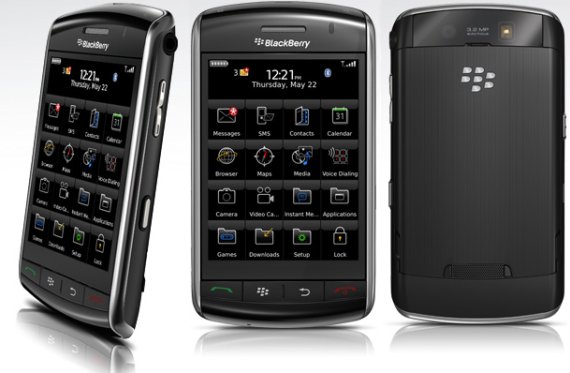
Research in Motion (RIM), the Canadian parent company of Blackberry, began it’s quest for first mover advantage in the smartphone business, on the back of healthy revenues from the educational PC market.

We now commence day 4 for generalised service failure, across its network of users. This was all RIM could say yesterday, in response to a now worldwide outage: “BlackBerry subscribers in the Americas may be experiencing intermittent service delays this morning”

In a world where mobile computing is now the standard, users have demanded, and expected, reliability. BB had indeed differentiated itself, on the basis of offering this reliability. One of its key selling points for business, was the fact that it has its own network of servers, and so is less reliant on the technology of the mobile providers whose platforms essentially act as a co-host.

Losing the perception of this security and stability, could not be more crucial for RIM – not least as it happens at a time when Apple is launching its own iPhone 4S, with a bundled iMessage, a rival to the lauded BBM.

Ian Fogg, a mobile industry analyst at Forrester, said RIM had built its reputation on reliability.

“RIM is in danger of becoming its own worst enemy if it is unable to reliably operate the communication services that have differentiated it,” he said on his blog.

“BBM is the reason many young consumers stay with BlackBerry. If it doesn’t work, they will leave RIM.”

Testing the Euro as a reserve currency…

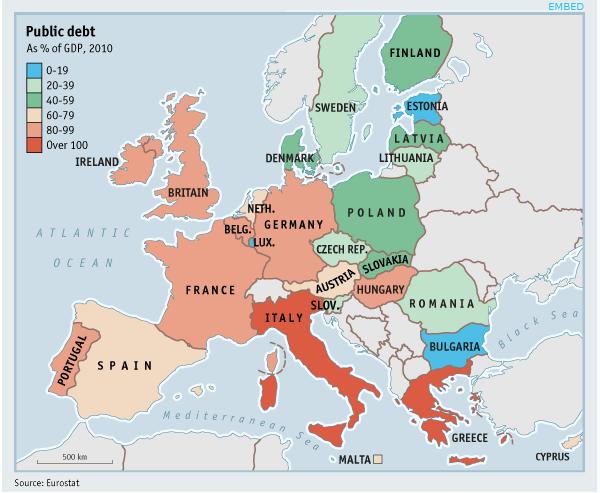
After such a faltering decade of mixed growth, and different prospects for the members, the Euro is having it first true test as a reserve currency.

After a recent vote the German parliament has passed (by 523 to 85) a vote to bolster the € 440bn eurozone rescue fund, the European financial stability facility (EFSF). As the FT says, the vote

“would strengthen the hand of the government, and revive confidence in Angela Merkel’s ruling centre-right coalition. They said it should alsosend a strong signal to eurozone partners that Germany was “ready to resume its responsibility” in the eurozone crisis….“Within the coalition, it is a very strong and comforting signal,” said a senior adviser. “But we are under no illusions that the next steps are just ahead, and they are going to be every bit as difficult.” “

The EFSF could easily become the most powerful tool available to the EU. It needs ratifying, and all decisions require unanimity. This is both a strength and a weakness: the market needs assurance that any action will be sufficient and responsive. Weeks of political negotiations will not be acceptable, the market will make its own decision.

Greece has to decide if, in addition to it’s fiscal retrenchment, that it wants private creditors to increase the haircut they have presently accepted, by taking a bigger writedown on the value of their bonds.

It is certain that even at € 440bn, the EFSF is not large enough to deal with a new bout of market speculation. By investing the facility with institutional powers, and giving it the power of leverage, this problem could be solved. Even with a small leverage ratio, the EFSF would remain a desirable investment. With the US recently losing it’s triple A status (and the world not ending), even if EFSF didn’t attract a triple A, it would still be cheap at the price to stop a run on Spanish or Italian debt.

Social Media and the London riots…

Over the last 3 days, in August, 2011, British cities have burnt, been plundered, widespread looting and murder itself having taken place.

Social media has been critical in this. Never before have people been able to organise and assemble with such speed and ease. More critically, and interestingly, has been the role of “closed” social networks – the Blackberry Messenger application. These messages are not open to outside inspection, and effectively provide a secure medium of communication between the rioters. Something meant for the privacy and business efficiency of its users (hosting it’s own servers, Blackberry can argue it is less subject to the whims of external comms system failures). Instead it has proved as secure as the Police’s radio network itself.

Meanwhile, the twittersphere, and Facebook are overwhelmed with comment, mostly shocked, from people outraged at the theft of their city. Yet serious discussion is to the fore. Critical sociological justification on the one side – and more ruthless “hang ’em and flog ’em” on the other. We lie somewhere in the middle. Rights are countered – always – with responsibilities. Expectation is tempered by the need for participation. Here is an example of an exchange we saw on Facebook….Good will out.

“Some very interesting comments overnight – Richard, I think most governments around the world would, if cornered, be pretty envious of Singapore’s fiscal position: large tax take and specific, investment focused, spending, with a strong history of government involvement in society…

@friend1 – these kids are British. They may be second generation (typically third), but they have no stake in society, and see little to be invested in. They are wrong, but it is we who put them there – we need to lead on showing them that they have a future, for, better or worse, they represent a part of all our futures.

@friend2, I disagree with your view on Capitalism, but, as you know, I respect it. By destroying small, local businesses, these young people are most seriously damaging their prospects of ever securing the stake that they demand. It is the small business that is the main employer and creator of new jobs – not the large corporation…

‎@friend3, I fear you may be right, but again, there are many women out there who struggle to do right by their children, and for whom their shame at the knowledge of their child’s involvement in this mayhem, is no less keenly felt because they are single parents.

Murder in the name of Jesus?

In all that is in the name of Holy – how can one justify the calculated murder of 84 people? The deliberate targeting of young, idealistic innocents? To pick people off, with a rifle – when they are not the enemy, they are not armed, they are not engaged in the war you believe you are fighting – all this beggars belief, and suspends our view in the God given hope that all mankind holds dear.

Norway is a peaceful society, for many years seen as the model of an idealised, albeit State heavy, society. One that ranks highest in the UN’s Human Development Index. One cited as a model for many others to follow.

These killings show again clearly that killing in the name of God are nothing other than murder and in this case on an industrialised scale. Fundamentalism, in any guise, is the sanctuary of the deluded. It is left to the families mourning their loss, and the society searching its conscience, to make sense of this murderous act.

The business of the Lib Dems…

At time of writing, MBC understands that the British Liberal Democrats (Lib Dems), have lost over 690 Councillors from the Local Authority elections held recently, and the loss of 9 major Councils, including Liverpool and Hull. Their share of the vote has fallen to 15%, a figure not seen since the days of the collapse of the SDP in the 1980’s.

By choosing the Conservatives as their ally in the UK Coalition Government, the Lib Dems chose political expediency, under the guise of moral purpose for the benefit of the country, over their own survival. In business, is not one of the core initial lessons – “live on to fight another day”? On this showing, a repeat of this performance at the UK General Election, could all but wipe out the party – undoing 30 years’ worth of deliberate and progressive electoral gain. The Lib Dems are, at the activist level, a centre left party. Their leadership, for a couple of years now, are from the “Orange” wing of centre-right near Conservatives. Again, in business, this would be to mis-understand your client base – are you in the right marketplace? They have been given a complete drubbing. With fundamental disagreement in the Lib Dem ranks about how to conduct the national finances, and how fast and far to exercise deficit reduction in UK national spending, they are very likely to find that their activist base will thin out significantly. Every party – or organisation – needs its grass roots, it’s “worker bees”. The Lib Dems had a more natural allegiance to the British Labour Party. The deficit reduction plans to be agreed between the two, would likely have more than satisfied the UK Bond markets; confidence in government would have remained.

Everything is always to play for: we are four years away from a General Election in the UK – yet the decision to join with the Conservatives could inadvertently have been the Hari kiri moment for the Lib Dems.