Comprehensive Spending Review

Chancellor of the Exchequer, George Osborne, laid out the Government’s Comprehensive Spending Review recently. It was a strong performance, fuelled by a managerial competence for the brief.

We think it was predominately sound fiscal re-ordering, and will hopefully result in a tightening of the improved credit rating that the UK was already starting to benefit from. There were some interesting points: the fact that the DCMS (Department for Culture Media and Sport) has a budget reduced to £1.1Bn, questions whether it is viable as a separate budget holding Department of State. Also, small points emerge that can have significant effects on individuals: for instance, no longer will a single person below the age of 35 be able to claim housing benefit whilst living alone; they will be forced to share. Social engineering is no doubt a by product of this Spending Review, but nevertheless it does indicate a determination to put very firmly back into the hands of the individual, a sense of their own destiny and personal financial responsibility.

Importantly, Employment Support Allowance (the replacement for “Incapacity Benefit”) has been reduced to a maximum award of 12 months. This is a serious attempt to manoeuvre those who are able to work, back into the productive workforce.Transport is expecting an increase of £30Bn spending over the next 4 years, though, even at RPI + 3% from 2012, as a fare rise cap for rail fares, we doubt that commuters will be happy with what will in effect be the highest cost per mile of any rail system in Europe. More positively, the M25 is to be widened between 10 junctions (doesn’t yet state which ones), and in London, Crossrail is to proceed.

Politically, these cuts are hard fought for, with polls constantly showing the public’s contradictory desire to see both an improvement in the UK deficit, yet unwilling to bear the burden of cuts on their favoured services. These cuts are necessary and vital in restoring both fiscal rectitude and ensuring the country is on more secure footing in its return to growth. Government spending as a proportion of GDP has increased from 38% in 1997, when the Labour Party took power, to 45% in 2010. We feel this is an unsustainable level of public spending commitment.

Some headline points:

£900m to be spent on targeting tax evasion and fraud to target £7bn of tax losses

Code of practice for banks to be implemented from November 2011

Legislation on permanent levy on banks to follow

Four out of 15 banks signed up to the UK financial code of conduct

The government’s objective in taxing banks aims to extract maximum sustainable tax revenue from banks without driving them abroad

Higher-income taxpayers will contribute more to the deficit reduction plan both as a proportion of their income as well as in absolute terms

Reforms to criminal justice system to include cuts to Ministry of Justice budget to £7bn

Shortly, each Government department will publish a business plan setting out spending priorities so that they can be held to account

Ministry of Justice cost reductions of 6 per cent per year

Home Office spending to be cut by an average of 6 per cent a year

Prioritising counterintelligence spending in national and local police forces

Police spending to cut by 4 per cent a year until 2014-15

International Development budget up to £11.5bn by 2014/15

Savings of 24 per cent in the Foreign Office budget will be reached by cutting the number of Whitehall-based diplomats among other measures

Osborne confirms cut for defence forces at 8 per cent over length of spending review

Ludwig von Mises – A Primer

My friend, Dr. Eamonn Butler, Director and a founder of the Adam Smith Institute, has just published his work summarising and introducing us to the work of Ludwig von Mises. It is available here, from the IEA, either as a free download, or as a paid for publication.In many ways, von Mises has been over looked by today’s generation of policy makers and economists, yet his prescience and clarity help better explain the context for today’s recession. Politically his insight was far reaching and still holds great resonance:In Interventionism, An Economic Analysis(1940), Ludwig von Mises wrote:”The usual terminology of political language is stupid. What is ‘left‘ and what is ‘right‘? Why should Hitler be ‘right’ and Stalin, his temporary friend, be ‘left’? Who is ‘reactionary‘ and who is ‘progressive‘? Reaction against an unwise policy is not to be condemned. And progress towards chaos is not to be commended.”

His output is huge – from the four volume work of “Human Action” to the brilliant and comprehensive “Socialism” (both available from Liberty Fund), his previously unpublished work, essays and lectures are still finding significance in a new generation of readers.

Dr. Butler manages to provide a succinct yet comprehensive introduction to these works: every paragraph is rich in reference. Speaking about the Liberal Framework, he say of von Mises:

“Nor does liberalism aim to provide a particular social structure, or a particular distribution of income. It merely establishes a framework of peace, stability and equality before the law, and within that framework, people are free to co-operate in any way they see fit…These things are merely the outcome of the complex , voluntary interactions between free individuals.” For a small book with a lot of punch, you could do far worse than read Ludwig von Mises – A Primer…

British Airways strike

Much of the heat caused over the recent BA industrial dispute is caused by the fact that, thankfully, we really don’t have a culture of striking as a way of resolving business problems – to any great extent – anymore, and as such, the various players are pretty useless at their positioning.

Tony Woodley has done a good self promotional job on behalf of Unite. Charlie Whelan sounded very ineffectual on various radio interviews, but very few on either the industrial relations front, or BA cabin crew are acknowledging that if they carry on losing between £250M and £350M annually (let alone Debt of £2.4BN, and Pension Deficit (not liability, but shortfall) of £1.5BN), they will not last a very long time before Crew Staffing reduces not from 14 to 13 per long haul, but 0, whilst the aircraft temporarily sit in the hangers, waiting for the insolvency chaps to find new buyers….

Ruining the TA

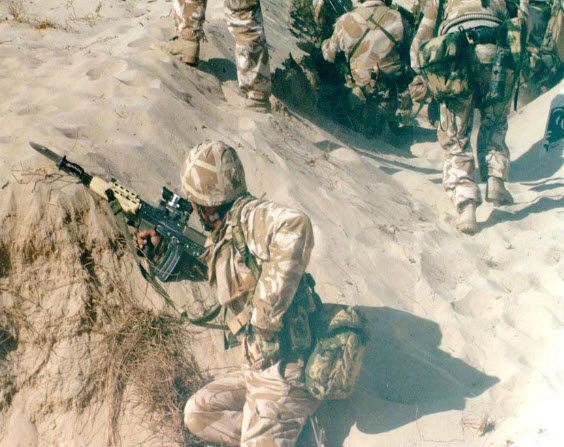
The British Army is one of the most called upon in the world. It delivers more “bang for buck”, than possibly any other regularly utilised force. Equally though, these expectations have become so entrenched, that any additional request put to the Army, is considered already done once it has left the mouth of the Minister of State for Defence (for it is often left to the junior Minister, rather than the Secretary of State for Defence, to make unpopular decisions regarding manpower). The recent decision to halve the number of days payable for training, to the TA, is the most short sighted decision on the part of the MOD in a very long time.The TA runs on the goodwill of its personnel. We have familes, we have increasingly demanding jobs, we are paid a starting salary of approx £30 a day, to put ourself in harms way. There is no greater civic committment, than to be a member of Her Majesty’s Forces. The TA do this in addition to their full time jobs and lives. The Britsh contribution to the Iraq War, was reliant on roughly 15% of its troops being TA.

The war, quite simply, could not have been conducted without them. They also require immense management time to co-ordinate efforts, training, pre-deployment training – and simply ‘showing up’. I personally know members of both the TA and the Reserves (recently left members of full time Service personnel), who have missed the birth of a child, whilst away on Operations. This is a regular occurrence for our full time Army colleagues, but it is a big “ask” for someone who has volunteered to be there in his or her spare time… To cut by half the days available to be paid (to 11), effectively means one weekend every two months, to fulfill training that will allow our TA colleagues to be prepared to go forward to deployment training, and, at the very least, to provide the “Home Guard” function, vital to protect this country’s national interest. The net result, in a year’s time, could easily be an operational TA of half it’s present size, its members simply having drifted away…back to their own lives. We anticpate the Government’s response at that time.

Hedge trimming on the Public purse…


(image illustrates hedge trimming around an MP’s helipad)

The thing that hasn’t been mentioned to any extent, in the recent MP’s expenses sage, is the nonchalant reliance on the State.

When the long term unemployed “sign-on”, they are considered “benefit scroungers”, yet for the life of me, after 20 years fairly close observation (and occasional participation) in the political process – I cannot see the difference, between this term of abuse for the proven needy and the self administration of funds to MP’s by way of supplemental income.

One MP appeared on the news to say that a constituent of hers had complained to her that she had had a formal request to the UK “Social Fund” rejected. The Social Fund is a means testing agency of the Department of Work and Pensions, which administers small loans and money gifts for the purchase of essential items. In this instance, the essential item under consideration was a bed and mattress, for a claimant with a long term health problem –  the mattress was allowed, but not the bed. So – the message is clear: we elect our officials to represent our interests in matters of local and national affairs. In the conduct of their office, they see fit to “self police” their remuneration in kind – as they are not directly responsible for their pay increases. They have cultivated a ‘nod and wink’ acceptance of incidental purchases that have only to satisfy an internal auditing committee, that they have been “wholly, exclusively and necessarily incurred for the purposes of performing their parliamentary duties”.

Thus, the cleaning of a moat (as there is no one else around to do it, the MP in question being indisposed in London, performing his Parliamentary duty)….the purchase of an elephant themed lamp, a bag of manure; the maintenance of underground pipes servicing a tennis court….all these items no doubt satisfy the House rules in their incurrance. The list goes on….and on. This is why this type of exposure can and will never again happen. It brings our Parliament and our representatives into shame. The petty, penny pinching, self betterment – clearly at the expense of other Public Servants – has to end. Above and beyond this though, is a culture of dependency that has soaked its way into every aspect of British life…

Eyeless in Gaza….

The attacks being undertaken by Israel at this time in Gaza, mean simply that the country has lost any claim to moral legitimacy – at time of writing, the death were approaching 350 – of whom 62 were UN confirmed civilians, not combatants. This in contrast to 4 Israeli dead over the past week – a ratio of one Israeli life equating to eighty eight Palestinian lives….not a just war.A nation doesn’t have to be at the centre of world diplomacy to know that these kind of tactics simply prolong the attacks they seek to stop: more people will now eagerly join Hamas in armed militancy. A basic knowledge of Northern Ireland, and countless other conflicts, not least their own, should have shown the hawkish Israeli Administration the futility of such disproportionate and bullying attacks. They now also have tanks gathered at the border (an arbitrary border at their initial discretion), prepared to launch the ground war. What ground war? There is no substantive enemy – and those that do exist warrant far better and more defined and delimited a response. It will take a generation for Israel to repair the damage to its reputation, if indeed it wishes to do so.