Spending Review

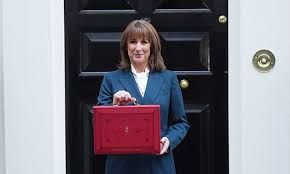
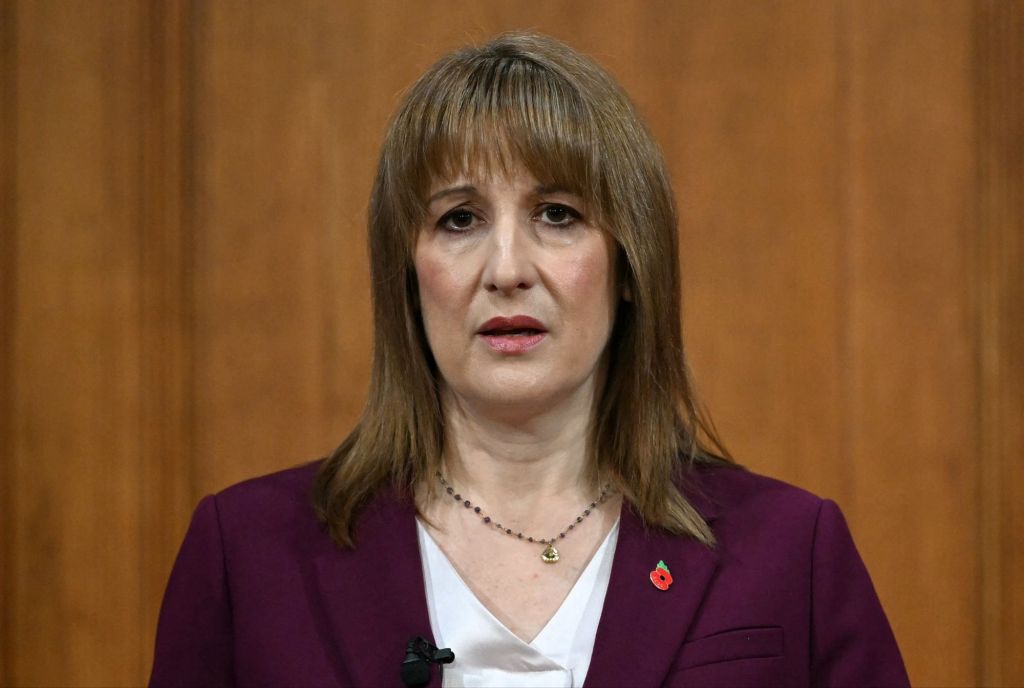
As an occasional commentator, it is easy to pontificate about motives in today’s Spending Review… Having looked at it again, I now think that it is a fairly complex and nuanced response to an environment that has changed – with a deepening of the security crisis in Ukraine, and a clamouring for more targeted funding for the police, and  increasing capital expenditure for the Department of Justice, in the prison building program… For the first time since coming to power Rachel Reeves has exhibited some maturity, not just as Chancellor of the Exchequer, a role that she had held in Shadow position for many years, but as one of Labour’s key figures. Arguably given the flack that she has faced in the past year with the truly misguided increase in Employers’ National Insurance Contributions, had she not made a very credible fist of this Spending Review, then her tenure as Chancellor would become yet more fragile.

“This is not a return to austerity”, she said, as she also spoke about reform, and the need for investment and renewal. The specifics were considered: across the Western world, arguably mirroring the rise in nationalism, the political classes have deemed it acceptable to reduce the Development Aid budget. The most extreme example of this was the dismantling of USAID by the Trump administration. More to say on that another time, however it provides a useful fig leaf for the squeezing of the Foreign Office by 6%, both in capital and day-to-day spending, notably through it’s foreign Aid budget. 

The sophistication of Government financing is often lost on the public, in that I am sure few voters would realise that a large portion of the Foreign Aid budget was actually allocated directly to cover the housing costs of UK illegal immigrants and asylum seekers. With a cancellation of this cost by 2029, as this function is now being brought in-house, with the building of specific accommodation. Commentators repeatedly mis-attribute the funding for these hotels to the Home Office when it actually largely comes from the Aid budget of the Foreign Office.

Debt interest payments at around £131Bn, are now slightly higher than the budget for the Department for Education, itself the second largest spending Government Department, after Health. Yet, like Health, it’s infrastructure is in quite dire straits. Apparently we are to await news on a separate infrastructure and industrial strategy positioning paper in the not too distant future, which should tie these aspects together into a more coherent and hopefully integrated strategy.

By relaxing the rules on Government Debt, to facilitate capital spending, the Chancellor has taken full advantage of the leeway this has afforded her. However she will be pulled back into the cycle of bond market vulnerability, should this spending profile not directly accord with what the Office of Budget Responsibility lays out before the autumn Budget.

The subtleties within the spending shows, in my eyes, the first time I can discern any sophistication in the day-to-day actions of this Government. The technology budget of the NHS will increase by 50% during this review period. Defence spending will rise to 2.6% by 2027, though apparently this also includes spending on the Intelligence Services (which is not universally agreed to form part of the NATO definition of Defense spending; equally with the technical and electronic sophistication of Defense, nor is it condemned) 

Realistically given the wafer thin margin, evident even after the relaxation of Government Debt rules, we now believe there’s a greater likelihood of tax rises in the autumn Budget.

#spendingreview #RachelReeves #capital #infrastructure

Toby Brown, visionary at 16!

I love this boy – and he is a boy, 16 years old, younger than both of my sons! (19 and 17)… And he has taken the phenomenally brave decision to suspend his GCSE’s for one year and moved to San Francisco in order to pursue his dream of setting up a visionary AI company, called Beem. 16 years old and he has already secured a $1 million dollar start up investment, and formal acknowledgement that in any venture created he will be majority shareholder!

He has just spoken on Radio 4’S, “The World at One”, with Sarah Montague, and given one of the slickest most naturally professional interviews I’ve ever heard. Modest and ambitious; a genius but with concern for the application of his Project before any personal consideration… He’s meeting our Prime Minister tomorrow, and already has the maturity and insight to say to Keir Starmer, that it is an awful shame that he, as literally a fledgling entrepreneur, has had to relocate to San Francisco instead of developing his vision here, with both state backing if necessary and more importantly, state facilitation and the freedom to act without second guessing an amateurish tax regime that appears to be learning on the job.

He says, “It’s built on something called proactive context which means it learns about what you do or what you like and it can remind you to do certain things. It keeps the human in the loop as much as possible but handles all the grunt work.”

It is acknowledged internationally that the UK is a world leader in creative applications of AI, and we have a pedigree of pioneering successes in the tech sector – but I’m with Christina caffery in arguing that the overbearing attention on the promotion of competition at the expense of fostering the growth of international titans, in any given sector, lowers the growth potential and Investment scale necessary for achieving the supremacy the we have seen in some of the US tech giants. Not all tech wizzes need to be “Tech Bros”… Some of them can be unassuming and quite quietly wonderful!

#AI #technology #entrepreneur #vision

UK Strategic Defence Review (again)

Ahh, politics, politics… Again with the rhetoric, Keir Starmer has today launched the latest Strategic Defence Review, SDR, which by any level of assessment is a bit of a damp squib. Treasury estimates of Defense spending during the course of this Parliament, come in at roughly £350Bn, of which only a paltry £10Bn is considered new additional funds resulting from the SDR.

In the Spring Statement 2025, the government announced a £2.2 billion uplift to the MOD budget for 2025/26, as part of the commitment to increase NATO-qualifying defence spending to 2.5% of GDP by 2027. That commitment remains, though the uplift is now £5Bn. Real-terms defence spending fell by 22%, between 2009/10 and 2016/17 (from £59.1 billion to £46.2 billion in 2024/25 prices), then rising to nearer its 2010 levels.

A relevant commitment to “upto” a dozen SSN-AUKUS class submarines, likely carrying a tactical nuclear capability, is welcome, though with the lead time required, are unlikely to be in place until the late 2030s. Some German military analysts have estimated that Russia could rebuild its current fighting force to a level capable of preemptively attacking a NATO member state, by 2029. I have written elsewhere (also received like a damp squib), rather than live in fear of an anticipated attack at some random date in the future, we should preemptively attack Russia, particularly now whilst its fighting forces are depleted. As reminded again recently, by Polish Foreign Secretary, Radek Sikorsky, who quoted US General Mattis: “Why do we need 300 million Americans to defend 500 million Europeans from 150 million Russians?” I would add, strategically, that Russian GDP is 24.5 times smaller than the combined GDP of NATO members, and that a number of these member states have tactical nuclear weapons readily deployable.

It appears that £1.5Bn is to be spent on ammunition, yet analysts estimate that £8Bn is needed for full warfighting capability – whether that be now (particularly in the replenishment of ammo given to Ukraine), or before the end of the Parliament. The Navy and the RAF appear to have done relatively well out of this SDR, whilst the Army are getting enhanced electromagnetic defense capabilities and a consideration towards military housing. For every 100 British soldiers who are recruited, 130 are currently leaving. Addressing this is critical, as is reversing the complete disinclination of current UK youth to participate in the military, for a whole host of socio-economic, and political reasons…

#strategicdefencereview #aukus #Russia #MOD

Economics as Applied Philosophy #2

On the back of my post last week discussing “Economics as Applied Philosophy”, and a generous invitation to speak, here I am explaining it to MBA students at the University of Kent.

I choose two out of arguably an infinite number of applications, one expressing a true macro scale (the economic rationale underpinning the geopolitics of conflict); and the other representing a true micro scale (the economic audit that comprises the Periodic Review in the water industry, reporting to Ofwat).

So, here’s me being important… apparently I’ve saved corporations “billions” rather than the “millions” that I showed, but hey what’s a consonant between friends? I’m the first speaker for around 15-20 minutes, from minute 4 or so…

Awkward marketing on their side in that they keep the cover slide up on screen, instead of the speaker talking..

https://lnkd.in/em7DJKs9

#economics #appliedphilosophy

Economics as Applied Philosophy

I’ve always taken it as a matter of pride to be interested in International affairs. I think as an Economist, the dots you join are not sectoral, or discipline based, or regional, or intellectual, or even psychological… I’ve always believed Economics to be fundamentally this: “applied philosophy” (the study of the fundamental nature of knowledge, reality, and existence, especially when considered as an academic discipline.)

What am I rambling on about now? 😂🤦🏻 Well, I’ve spoken before about the modern siloing of Economics – microeconomics being curtailed by the rigidities of linear regression; macroeconomics being subject to the vagaries of the bond market and yield curve analysis (which in my book has a lot more going for it than the straightjacket of linear regression!)

However this isn’t enough. Economics is much more than this – as can be seen, again, by a conference on the relationship between China and India, hosted by the wonderful Chatham House, of which I’m proud to be a member… Applied philosophy if it is to be useful, (as per my argument for this designation for Economics), is predicated on everything. Everything. Sociological subtleties between one county and another (eg Lancashire vs Yorkshire in cotton vs woolen production, which of course was also based on geographic attributes)… Right down to why do I consider it necessary to arm myself against my fear of you invading me? (Tensions over the China/India border).. running on of course to, where do I buy my weapons from? Will I get a better deal from a country that wants me to act as a proxy on their behalf… in arming myself more comprehensively do I present as a more secure trading partner or a more volatile one? Am I contributing to my own industrial development, through enhanced weapons technology that can translate to domestic industry? Will my safety enhance my prosperity or promote a rivalry in productivity and trade that I hadn’t foreseen (the emergence of other southeast Asian economies as China moves up the value curve).

The world is changing. Trump has inadvertently switched on a macrocosm of geopolitical and geo-economic activity, through his ignorant blunderings. We may well come to thank him when the dust settles…

Trump guilty of Treason?

Treason. If I was an American this is what I would be saying that my President was guilty of. There will always be ups and downs, but as far as everybody was concerned the American economy was functioning as it should, subject to policy variations, inflections on interest rate adjustments, exposure to foreign currency movement and generally subservient to, and subject to, the bond market (US Treasuries ) – which as the debt and budget management provider of first/last resort, all seemed to be a perfectly reasonable proposition…

And then President Trump comes along and based on mercantilist perspectives on trade – and his own unknowable psychology – he decides to play a version of Russian roulette with the world economy. Again, based on zero sum methodology, that simply has no place whatsoever in international trade – or diplomacy. In fact not only does it not have a place, it is precisely the worst way imaginable to approach your allies, whether it be from an economic or a political standpoint. Janet Yellen today described Trump’s measures as the worst act of self-harm on a perfectly functioning economy.

Technical economics sometimes finds it hard to discount for ephemeral variables such as pride – yet this is precisely what is on show in China’s refusal to dance to Trump’s music. As far as I’m concerned – why should they? (Other than the pretty obvious reasons of trying to avoid the continuation and magnification of self inflicted wounds, through the application of somewhat similarly extortionate tariffs on imports from the US… But what’s a chap supposed to do, right?)

One thing that screams out is – where are all these constitutional protections that academic lawyers in jurisprudence have always so celebrated in the US Constitution? How can a guy, that in so many other instances one imagines could easily be sectioned, be allowed to wreck havoc in the international economy, embarrass his nation, and present as entirely transactional, relationships cultivated over a century of goodwill between allies?

I’d say hand me the popcorn, as this is some show – except that tariffs on corn, maple syrup and the wood pulp for the box it comes in, have now pushed the price of the popcorn up to more than the movie…

#chaos #economics #geopolitics #trump #treason