Turkey strikes Syria…

In June this year, Syrian forces shot down a Turkish military jet, claiming that it was in Syrian airspace. Turkey maintains that it was clearly in Turkish airspace. So began a militarisation of the conflict between Turkey and Syria – neighbours, former allies and potentially powerful enemies.

Recently, the Turkish parliament passed a Bill allowing unilateral military action against Syria, resulting from a shell fired over the border having killed 5 civilians. “It is not a bill for war”, said Besir Atalay, Turkey’s Deputy Prime Minsiter, though it is intended to possess “deterrent qualities”.  Turkey retains one of the world’s largest standing armies, at roughly half a million soldiers it is larger than the professional armies of the UK, France and Germany combined. It is second only in size, within the Nato bloc, to that of the US. Similarly, as of last year, there are serious and considered plans to yet further double the size of the Turkish army – to a million soliders trained and paid for by the Turkish state. The aim being to both solve issues Turkey has had for many years with terrorism and its Kurdish separatists in the southeast, and long term structural unemployment.

Turkey has been reserved in its response to the growing violence in Syria, fearing unilateral involvement, and actively pursuing a UN resolution or a broader NATO containment force to be deployed. It is critically aware of historic sentiments towards its Ottoman rule over much of the Middle East. Yet, like the quiet but forceful boy in the playground, it’s not really wise for Syria to go poking him in the eye…

30,000 estimated deaths in Syria, as of early October 2012, is still apparently not enough to prompt either a consensual UN resolution, or an intention from NATO to deploy force. The rebels are not tiring of their all too just cause, and Assad feels strengthened both by this International inertia and the civil strife in the country his family has dominated for two generations.

A hammer to crack a nut…

The United Kingdom Border Agency (UKBA) has decreed that London Metropolitan University (LMU) has forfeited it’s right to sponsor foreign students. By foreign, it means non-EU students. Precisely the sort that LMU prefer, as their fees are far higher – even after the home students’ increase – than everyone else’s.

This is bizarre, misapplied jingoistic policy at it’s worst. Sure, there may be students who don’t have the right to stay in the UK; they may have out stayed their Visa, or be working – or never have studied in the first place. Find them, and deport them, but don’t stigmatise 2000 students whose sole crime is not being European.

The University should be sanctioned, fined, license restrictions imposed…but don’t penalise the students, some of whom may have bankrupted their families to send them to what they, wrongly, thought was a prestigious English establishment dedicated to truth, knowledge and the pursuit of self betterment. The reputation of the UK University sector overseas may not recover from this act. Education is a very fast moving market, and an English one is not necessarily seen as gilt edged anymore – even if it still fares well by international comparison. In such a responsive sector, Government action should be there to facilitate and support, not undermine and jeopardise.

US Soldier breaks under pressure…

For all of their training, soldiers are people first and soldiers second. This simple fact can be seen yet again in the breakdown of one of these people, resulting in him shooting dead 16 people, in an unprovoked, premeditated act of murder.

Is a man guilty if he loses his mind? What are the ethical views of a society towards such a man; a society who recruited him, trained him, armed him and sent him out into a workplace – an arena of war, where he lost his mind. Does that society have a duty of care to this soldier? Is it really likely that such a person would be a mass killer in other circumstance? Lost his self regulation, forgot his empathy for his fellow man and took away their right to life.

This incident in not unique – just over two years ago, a middle ranking Officer and a senior professional (a US Army Major, serving as a psychiatrist), shot dead 13 people and injured 29 others, in the worst single act to take place on a secure American military base. How bad can things be, when the professional employed by the Army to address and resolve mental health issues in the soldiers for whom he has responsibility, himself loses his mind and instead of caring for and counselling his charge, he kills them.

On the latest figures we found (for 2010), US Army suicides were up 80%, from 2004, following the invasion of Iraq – to a total of 160 personnel. Previously suicide rates were far lower than amongst the civilian population. This was for a host of well documented reasons: camaraderie; purposeful occupation; role of physical exercise in mental well being; the importance of “joint purpose”. For this situation to have so catastrophically switched around is devastating to the lives of the serving soldiers, their families, the broader Army ethos and not least for their victims.

In a war that is operationally winding down – and all parties know this, its outcome will be measured by hostile actions of the Taliban in Afghanistan, within two years of US withdrawal, and the civil disorder still prevalent in Iraq. For the ISAF soldier, this outcome will more tangibly be measured by the mental health state they are left managing as they retire from the military and return to civilian life, along with the rest of us.

Race taunts at Anfield

Anfield is the home of Liverpool Football Club. LFC has one of the most illustrious histories in world football. Arguably, it showed Manchester United, the biggest club in the world, how to do it – and spent almost twenty years at the top of the European game.

However, the recent racist tauntings of a visiting Oldham player, reveal that for all its claims to have modernised, football can all too easily resort to the provincial, parochial and small minded behaviour that tainted it for several generations. In the nineties, Liverpool had the elegance and talent of John Barnes to call on. Yet Barnes, a black Briton, would frequently walk on the pitch to bananas being thrown by racist fans – and many of these were home Liverpool fans!

For all its multiculturalism, Britain still suffers from huge regional differences, in relation to diversity and acceptance of differences – both cultural and racial. Our northern cities still have some way to go, to recognise that we are now one of the most racially diverse, and actually harmonious with it, countries on Earth. These differences emphasise that most of the “ethnic population” of the UK, lies in the south, and that for our small size, there still remains great intolerance and ignorance, particularly amongst the working classes of the north.

LFC authorities and the police (who themselves have much to learn), should pursue this case and not allow fans to think that this behaviour is acceptable. It isn’t.

History speeds up…

This has been a momentous year. On the 17th December 2010, unemployed Tunisian youth, Mohamed Bouazizi, after having his vegetable stall removed by the police, sets fire to himself in protest. He later dies – this was the literal spark the garnered Tunisian youth into rebellion. Within a month, Tunisian President Ben Ali, had fled to Saudi Arabia, his regime collapsing.

This movement was soon adopted by the Egyptians, Jordanians, Palestinians and Syrians, to a greater or lesser degree of earnest application, and repressive crackdown. Syria is ongoing; Libya spawned a Conflict all of its own, involving a myriad of Nato forces – though, no manpower on the ground. So. we heralded the “Arab Spring”…the US, for once impressive in its restraint, adopted  a “wait and see” policy – one it still maintains.

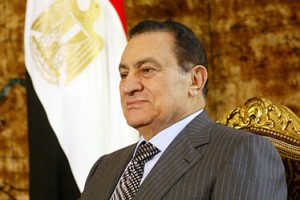
The year moves on: Mubarak finally resigns (“finally” in this context should be qualified: after a 30 year reign, to take a couple of months to oust, is no mean feat.) Libya, however, entrenches – Colonel Gaddafi isn’t going anywhere…months of violence ensue, cities are bombed, thousands displaced, hundreds killed. The western countries follow an aerial bombing campaign, a war of attrition from the sky begins and formal alliances with the rebels are established. The bombing begins to co-ordinate with rebel movement on the ground; Gaddafi flees. He is later captured, physically violated and killed by those he has ruled for 40 years, those who he swore would die to protect him…

Meanwhile, back in Europe, things are not looking quite so rosy either. We enter the fourth year of either recessionary or significantly below trend growth. The countries of the Eurozone experience further problems in their fiscal positions. Europe, in the main (Italy always being the exception), has a recent history typified by stable government. The problems of the Euro and unsustainable debt begin to take their toll – as does almost 40% youth unemployment in areas of some member countries. Individual nations begin circling around that great spiral known as “Default”. The prospect of an ignominious exit from the greatest project of European unity, now seems an all too certain outcome. Greece is likely to be the first taker. Ireland, once the doyen of the Euro enthusiasts, now is littered with entire apartment blocks nobody wants to buy, and heartbreakingly, a new exodus of its’ talents…the first mass emigration out of the western European nation’s…

So…what do we conclude? Simply, that few things are knowable, that history itself  is speeding up and our path uncertain. That mass media and technology act as both a catalyst and spur, and moreover – witness. We are all participants, we are all stakeholders and some of us get to be drivers…which direction shall we head in 2012?

The beginning of the end of the Euro

In our last posting, we spoke about some of the technical concerns underlying the solution that had seemed all too temporal, in the problems of the Euro.

Today we hear that the Greek government, on whose behalf the Prime Minister had accepted the deal, may itself be close to failure. Apparently, the Greek Finance Minister has now changed his position on the suggested referendum, recently put forward by the Prime Minister. This referendum was proposed, one feels, as a matter of conscience on the part of the PM, in light of the austerity it would continue to impose on the Greek people.

Given that inevitably that question has to boil down to one of principle: should Greece be in the Euro or not? The PM is, at time of writing, looking like he may not survive the vote on whether to proceed with the referendum. The leaders of the Eurozone, notably France and Germany are stating that the first tranche of bail out funds will now not be paid, leading to effective default on the part of Greece, increasingly unable to pay its debts.

Some thinkers have now begun to rationalise what many of us have been saying all along – that the Eurozone will be little worse off without the Greeks. No bail out fund until a decision on the referendum, and if the answer is the wrong one, then no bail out fund period: Greece will default more legitimately than this slow strangulation, and return to the Drachma.

With the loss of its weakest member, the Eurozone could consolidate and strengthen…or unwind completely. We are at the end of the beginning, but of exactly what, remains to be seen…