Peace is not peace if somebody else is steadying the gun for your enemy

Peace is not peace if it is arrived at through a non-committal third party steadying the hand of your enemy who is pointing a pistol at you.

That is not peace; that is not even appeasement. It’s surrender. Which could easily lead to occupation.

Ukraine is very careful about declaring numbers of its dead and injured, and the general consensus is that Russia now is at more than 1 million dead and injured – again without specifying the breakdown. Russia is big enough and populous enough to have been able to mobilise “politically insignificant” (as they see them) conscripts from its further geographic reaches. Many of the educated professional middle classes fled across the border as soon as the war was declared. Putin has prevented serious political unrest by not conscripting greater numbers from the urban elite in the most populous and politically relevant cities. The Wagner Group ploughed through tens of thousands of prisoners, promising them amnesty from their crimes and a lump sum, if they stayed fighting for 6 months. The general belief is that roughly 50% of these prisoner conscripts died – as they were the least trained and the most expendable – and deployed to the sharp end of the front line. The current deal for prisoner recruits is “till the end of the war or death, whichever comes first.” Nice.

The simple point being, Russia simply doesn’t care who it kills, including a sizable portion of its own population.

Surely one of the most embarrassing agreements in modern history is the Budapest Memorandum. Signed by John Major for the UK, Bill Clinton, Boris Yeltsin and Leonid Kuchma, for Ukraine. In exchange for Ukraine surrendering its nuclear arsenal, the signatories provided security assurances that respected Ukraine’s territorial integrity and sovereignty. The realpolitik of this has proven too difficult. Why then, should Ukraine trust any peace treaty signed by Russia? Why? Apparently there is such disquiet on the streets of Kiev, amongst veterans of the Army, and soldiers on leave, that already a revolution is being spoken of. So, externally disastrous for its territorial integrity, surrendering cities not yet militarily seized – and internally disastrous, as the country’s own society rejects such a peace plan.

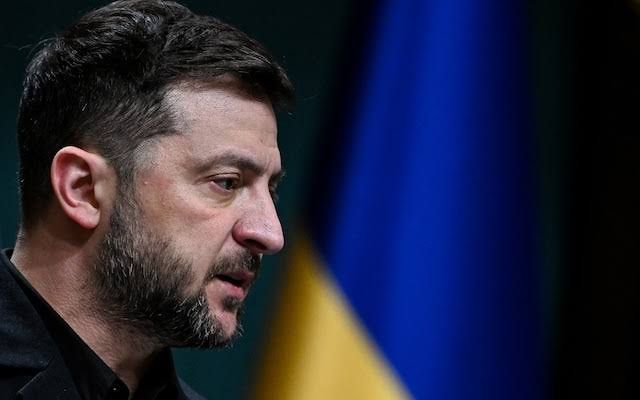
Zelenskyy has said with gravity that Ukraine faces losing either its dignity or its leading partner, in acceptance of such a deal. Yet beneath this sadness, I am sure a very real sense of betrayal exists. As one Ukrainian politician said, “on the one hand we lose US Patriot missiles, if we don’t accept, yet on the other hand, we lose our country if we do…”

I’m not sure this will go down too well for Trump with the Nobel committee…

#Ukraine #Appeasement #BudapestMemorandum #WagnerGroup #Zelensky

Chicken versus Headless Chicken? Which lives longer?

Fey, our Prime Minister

Today is a good illustration of the fundamental difference between Economics and Politics…

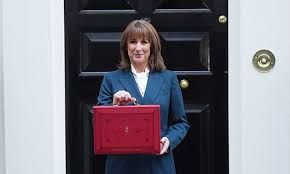
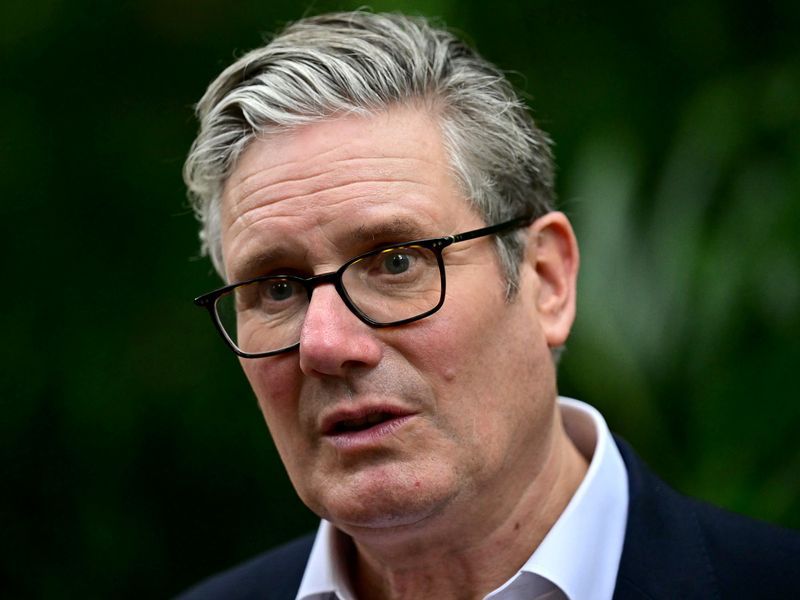
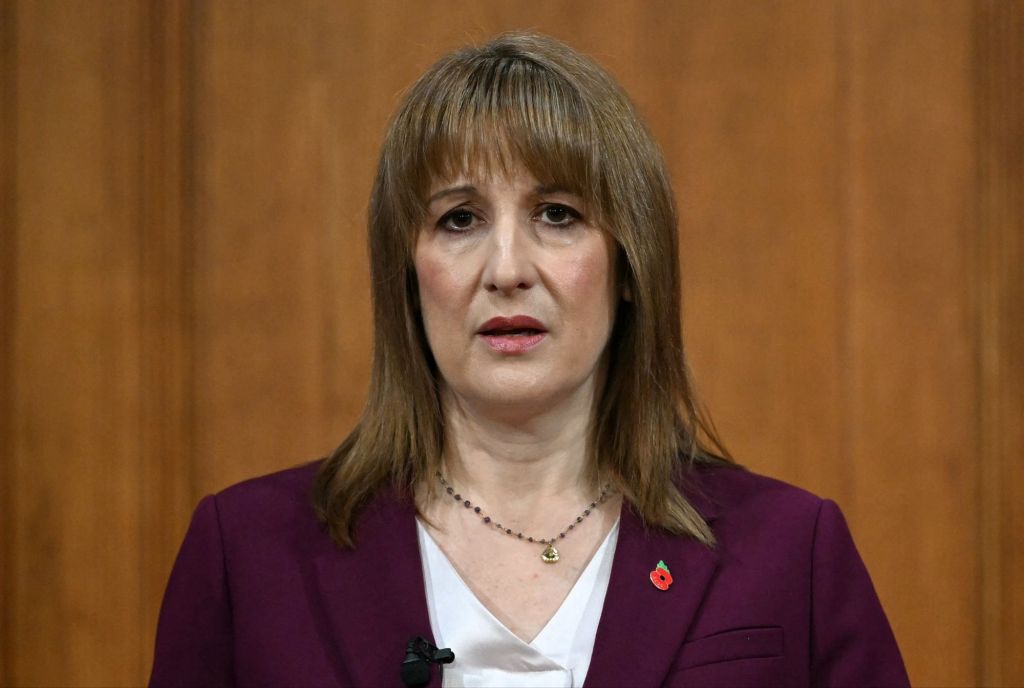
There is an important distinction to be made between being a chicken running around, and being a headless chicken. It is the fact that Rachel Reeves believes that actually there is a real chance of the Labour Administration being beheaded at the next election – and with the concerns over the current leadership of Starmer, it might not even last that long…

I wrote previously about the political danger from the country and backbench MPs, on the Chancellor going back on her manifesto commitments. The markets don’t see things this way; the markets see a fiscal problem and then the political intent to fix it. This is more of a mechanistic and arithmetic approach – which, is of course fine. It’s just that Politics doesn’t work like that. Just as Economics cannot ever, finally, rationalise the human, Politics doesn’t follow the arithmetic purity of fiscal balancing, if that balancing requires a very obvious breaking of a manifesto pledge. 

Running around like a chicken, in the Chancellor’s assessment, at least allows her to run around. As a headless chicken, this Labour Administration wouldn’t get to run for very long. 

So it’s not pretty to look at, but this move represents political street fighting by the fey middle class.

#Chancellor #Politics #Budget #Survival

Will Trump invade Venezuela?

US Navy heading to Panama. Could it be Venezuela?

In some ways Trump is the Economist’s perfect President: he is Stochastic. He’s also a geostrategic quandary…

Stochastic, not sarcastic 🤦🏻! For the non-economists amongst you, this means he has a random probability distribution in his actions that doesn’t lend itself to pre-action analysis.

I’m talking about Venezuela. He brings it up in the way James Joyce brings up the possibility of redemption in Catholic theology…i.e, it’s always there yet always uncertain. Trump has also made a great deal about being a stay-at-home President, avoiding forever wars, yet then of course he speaks about developing the Riviera in Gaza and the possibility of invading Venezuela..

In American terms Venezuela is symptomatic of a demand and supply problem. As somebody relatively abstinent in life, I happen to believe that it is the demand considerations that are the driving force. If US wealth and proclivity to drug taking weren’t so enormous, the rest of the world wouldn’t keep trying to sell them enormous quantities of drugs, therefore rendering themselves liable to possible invasion and complete societal breakdown post invasion. Much as I admired Ronald Reagan, I always found Nancy Reagan’s, “Just Say No”, to drugs, somewhat hectoring and naive. If anything, drugs have entirely surpassed all class barriers and are considered, if not completely normal in polite society, then certainly not unusual. And I am not speaking about fentanyl. 

The idea of a U.S. military invasion of Venezuela to disrupt drug exports is considered extremely unlikely, due to the immense costs and risks. If we analyse the geo-strategic considerations, this reveals the multifaceted nature of such a decision.

The core strategic dilemma is that a military invasion would address a significant transnational criminal threat but at the potential cost of triggering a regional humanitarian and political catastrophe, alienating key global partners, and tying the U.S. down in a prolonged, costly nation-building exercise. The perceived benefits are primarily tactical (disrupting drug flows), while the risks are overwhelmingly strategic (global reputation, regional stability, great power competition).

Any invasion would destabilize neighboring countries like Colombia and Brazil, fueling corruption and violence in the Caribbean and Central America. The existing refugee crisis from Venezuela’s collapse has already placed a massive strain on the region.

Trump’s has mused ousting Maduro’s regime, with, it seems no post regime plan in place.

Stochasticism is what makes Trump interesting, yet unpredictable. Unfortunately the ramifications of invading a state, and lacking the will or resource, or application, to implement and manage a post invasion plan, can all too easily be seen in Iraq and other states, and this alone should be sufficient to prevent it happening…

#stochastic #internationalrelations #Venezuela #Trump #economics

To paraphrase Genesis: this tax will be a reserve for the land

Pensive Chancellor

James Carville has now probably an immortal place in recent political history, being the original source of one very famous quote, and also a second slightly less famous and equally powerful one. Carville, whilst working for Bill Clinton, coined the phrase, “It’s the economy, stupid”… And we all know what that means…He then went on later in his career to say, when speaking about reincarnation, “now I want to come back as the bond market. You can intimidate everyone.”

Rachel Reeves has taken quite some time in getting there, and she has in a sense, been complacent about the generally positive relationship exhibited by the bond market towards her Chancellorship. More than in many countries, the intricate dynamics of politics and economics are quite fast moving in the UK: look at what happened with the rapid succession of Prime Minister’s during the last Government. My own bet is out as to whether or not Rachel Reeves will raise income tax, as being one of the three core taxes that she indeed vowed not to raise. 

However, it is a fairly large fiscal hole that she seeks to fill, circa £30Bn, and this will not be filled lightly. Equally given her series of notable political missteps (I have argued from the outset that she simply should have reversed Jeremy Hunt’s NIC personal reduction, given just months before last year’s general election – this, in one sweep, would fill roughly half of the fiscal hole); she has been on thin ice with Labour Party backbenchers. Her fortunes are inextricably linked with the Prime Minister, and backbench MPs would come looking for a scalp to feed their irate constituents, braying that the Government had backtracked on one of its key manifesto pledges. The Government itself would become vulnerable, just as Liz Truss’s Administration faulted, and she was defenestrated… Once a public gets a taste for taking heads, it’s usually quite hard to displace.

Brilliant rhetoric is never remembered, unless you’re Martin Luther King, Yet whether a family’s net income has gone up or down certainly is. Freezing tax bands, higher council taxes, capital gains exit taxes, higher gambling taxes and other measures can, if accumulated, get Reeves within a stone’s throw of her goal. The Timms Review has yet to report and may reveal achievable savings. Similarly there has been recent studies regarding empowering employers to reach out through their worries about their employee’s rights, to reclaim them back into their world of work, once a staff member is written off sick. Currently it is all too easy for this employee to simply disappear into the system, and slowly drift away from work itself. As a trained and valuable resource, organisations have the right to fight for their employees, even if at the time the employees don’t quite see it that way…

#tax #fiscalhole #politics #economics

2025 Nobel Prize for Economics

Going for gold

Some years ago I had the enormous privilege, tinged with envy, of holding this beautiful golden disc in my hand. It was nearly 5 inches diameter, ornate and embossed… It was the Nobel Prize in Economics, awarded to Hayek in 1974. I had the honour of being friends with Hayek’s son, Larry, and daughter in law, Esca, who sadly passed away only a few years ago…

This year’s Nobel Prize in Economics is a  timely one, awarded to Joel Mokyr, Philippe Aghion, and Peter Howitt, for their work on innovation and how technology can enable the forces of “creative destruction”, driving economic growth, lifting global living standards. The phrase was coined by Schumpeter, a famous Economist, now immortalized in a column in The Economist. A very simple yet powerful concept, that the new, better designed and more applicable, revolutionary and innovative technologies can replace the old. The loom replacing hand weaving. The car, superseding the horse… You know the story…

Mokyr, an Economic Historian (yay for my original discipline!!), eschewed our worries about AI taking over the world, and says it uses the data we feed it. He described it as currently “a magnificent research assistant”. On this I’m afraid I disagree; even recently, when pursuing a particularly intricate mathematical solution, the AI that was solving it, actually created new maths, the researchers said! And there are numerous instances, were programmers have attempted to limit remit of the life of a program, and the AI has successfully circumnavigated this – so, obviously more to say here.

Aghion and Howitt’s original model dates from a 1992 paper, illustrating how companies invest in both process and product in order to out compete antecedents… This has direct relevance for policy, as can help identify R&D opportunities, which can sometimes pull in different directions depending on which is the promoting source – either private sector or the government. In the first case, benefits are initially privatised (though no doubt will bring broader gains), whereas government seeks to benefit broader society. Different companies will compete for replacement status. With humility, I dare to differ from one of their conclusions: Aghion warns of the creation of “superstar” corporations, which can achieve monopoly dominance, and therefore stifle competition.

My own view is that this is not black and white, and that for instance, European competition policy focusing on the most level of level playing fields, has created a host of minnows – rather than any dominant operator. In this instance it could be argued that European competition policy has lead to an outcome where the sum of the parts is less than the whole… A consolidated and dominant player within a given technology, can often drive complementary technical and commercial advances, in ways that a swathe of disparate and unconnected technologies, cannot achieve…

#NobelPrize #CreativeDestruction #Aghion #Mokyr #Howitt #CompetitionPolicy

In anticipation of the Budget…

I’ve almost been inclined to stop writing about Economics, because it is just so astonishingly dispiriting. Rachel Reeves originally was Gordon Brown’s Economic Advisor, and of course she was not front-facing; so, what you saw was a serious looking, cerebral appearing, Advisor to arguably the most intellectual politician since Michael Foot’s misguided attempts to lead the Labour Party towards a socialist sub-utopia…

However, if a foot could be placed wrong, Rachel has managed to do it. I literally felt like I had been winded when one of her very first moves was the Employers NIC tax raise: if ever a wrong signal could be sent to our business community, that was it.

I don’t know if our country is in Intensive Care, but we are certainly in A & E, along with the hundreds of thousands of people each day, either underemployed or underproductive in their occupations. 

Some months ago, Government launched their Industrial Strategy. I’ve been involved in this area for a long time, and it was a complete damp squib. Little element of progression or momentum, in a “Strategy” that appeared to be more an ad hoc listing of aspirational ideas, that didn’t achieve a collective aim. 

An industrial strategy is precisely that: a coherent and strategic path, combining integrated elements of structured economic activity, that you have to go backwards in order to achieve this path. Backwards, in identification of the manual and technical trades’ that you wish to capitalize upon, and re-engineering their Trade courses. 

Financing, has to balance the contingency of measurable productivity gains, whilst simultaneously securing repayment, on a rolling schedule that allows necessary capital injections. 

Technology: nobody can ever future-proof anything, but you can start. I know that we have the software engineering skills to de-engineer “Deepseek”, and discover exactly why it needs a fraction of the energy input that Chat GPT does.

Private Finance Initiative (PFI), has always shocked external analysts, for being a three letter acronym that holds the Government to ransom in the scale of profit taking upon which it is built. Surely if we are to build assets, we don’t need to be gouged in doing so? 

Direction. Who are we, and what do we want to do? We are world leaders in all aspects of the creative arts, yet we can also build and design the most sophisticated and desirable cars in the world… so why should the middle bit be missing? The bulk of the rest of our retail, service and industrial sector presents as a mediocre alternative to our continental competitors. Which is why I spoke at the start about the vital contribution of our Trades’ education.

If Merck has decided not to invest £1Bn in R &D, in the UK, in arguably one of our golden success stories, the pharmaceutical industry – that should be seen as a crisis.

Please, lackluster Labour Gov, take note..

#Budget #Taxbetter #Labour #Industrialstrategy